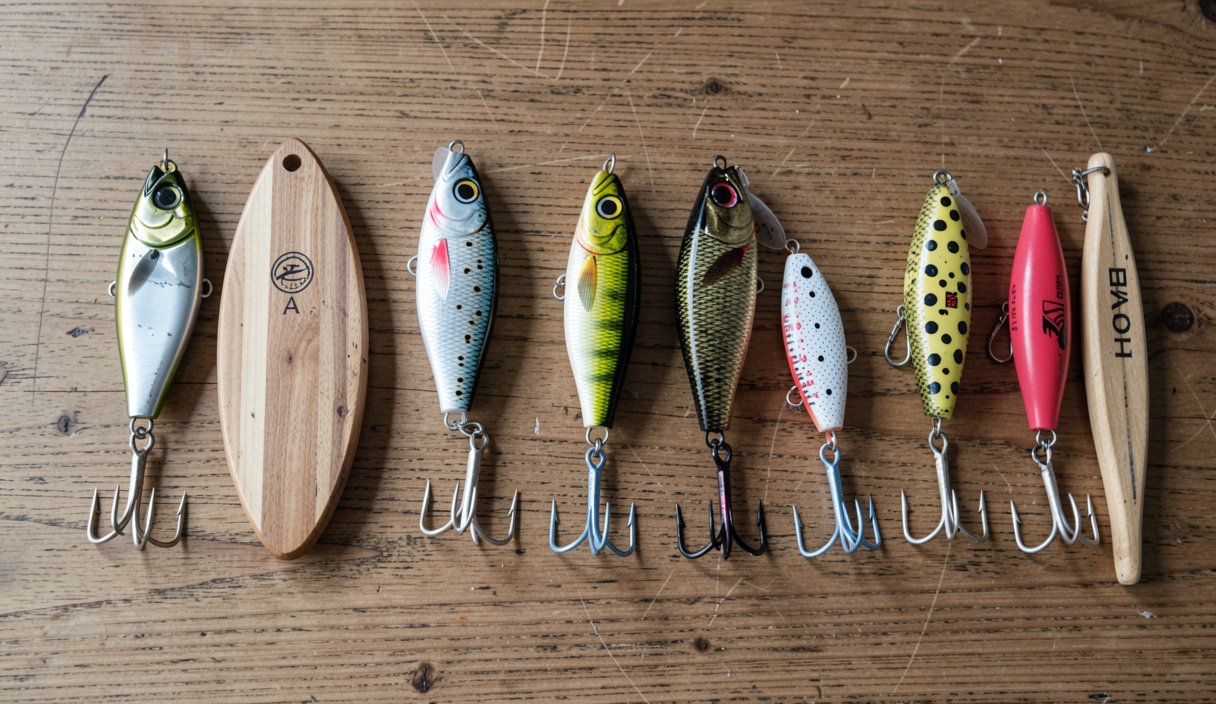
A field guide to surfcasting tackle, water and build.
Reference / Wood and finish
Wood, ballast and finish in a surf plug
A wooden body is a small changing structure. Density, moisture, wire, ballast and finish all alter how the finished plug behaves.
Wood and finishThe body is not just decoration
The body is not just decoration
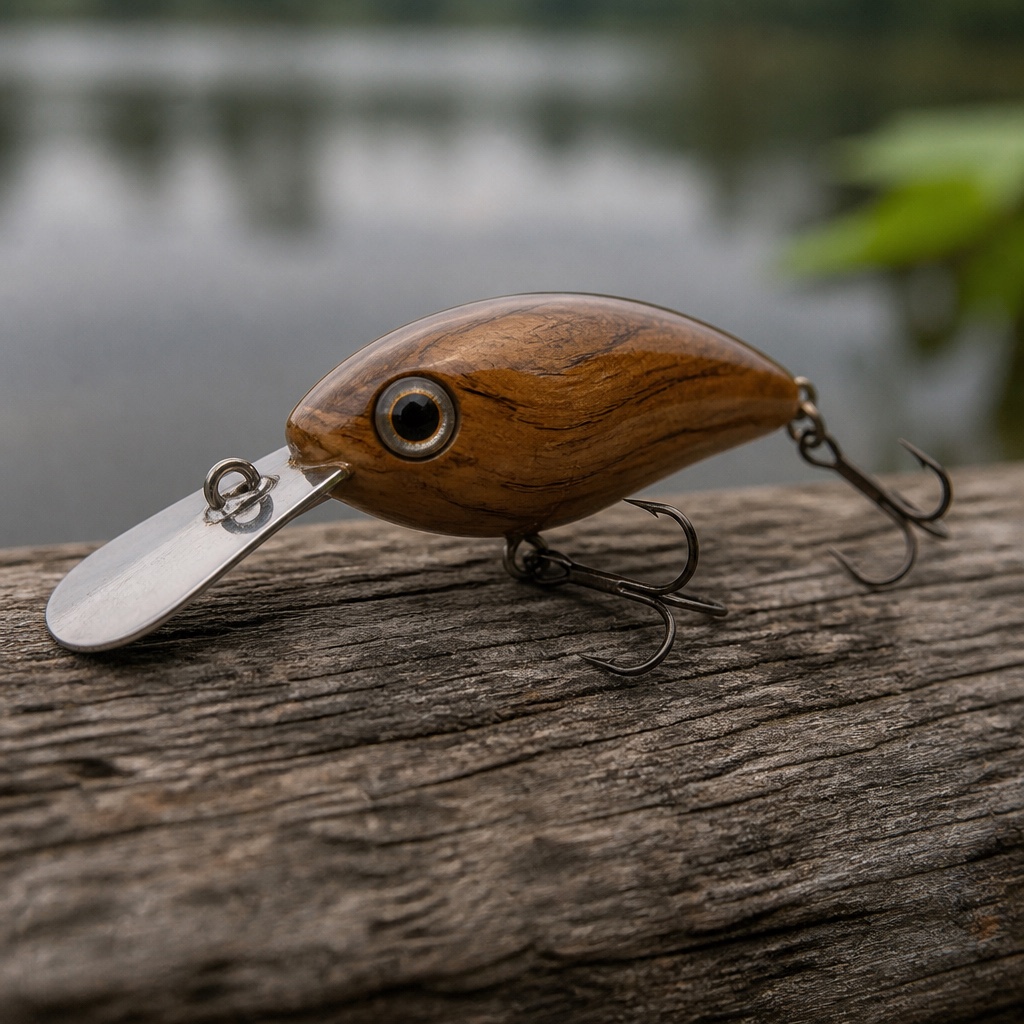
Wood determines more than the color under a finish. A lighter body can leave room for ballast or hardware. A denser body may need a different amount of weight to reach the intended trim. Grain direction, end grain, cuts and the quality of the seal all affect how a body responds once it is exposed to repeated casts and salt water.
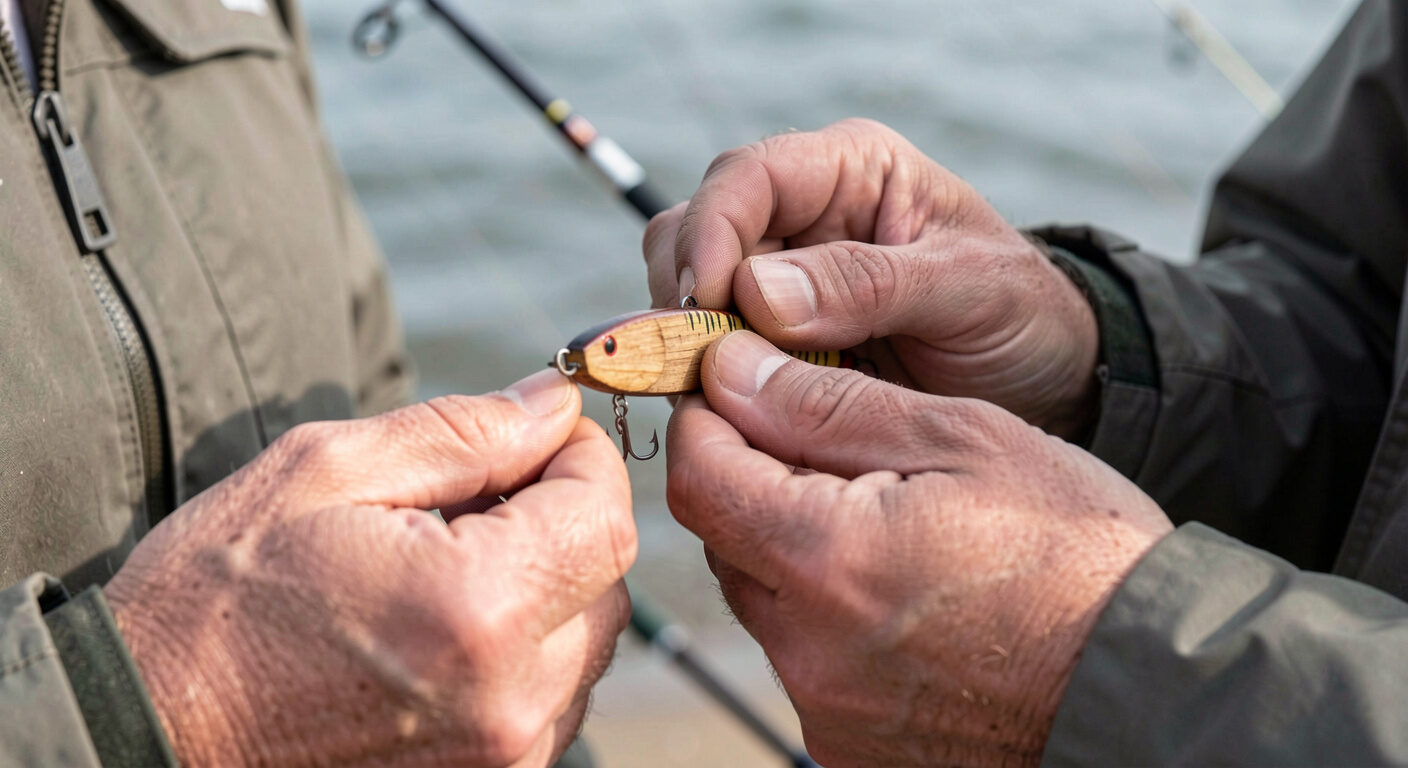
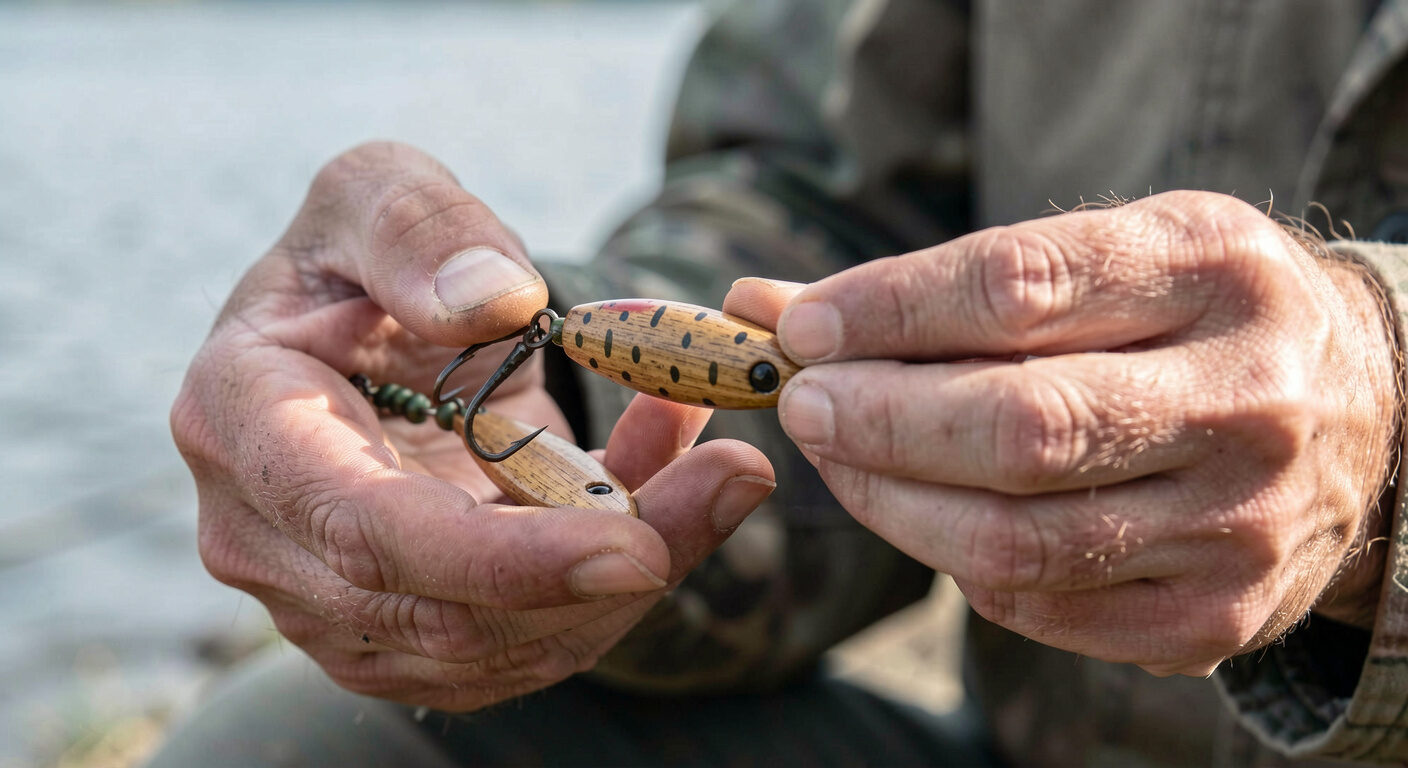
The useful habit is to treat every plug as a small structure. Look for the through-wire path, the lip slot, the hook hanger and the places where finish must bridge a cut. A beautiful surface cannot compensate for water entering through a weak point. Build decisions show up later as buoyancy, durability and the way a plug sits at rest.
Seal for stability, not magic
A finish slows the exchange between the body and its surroundings, but it does not turn wood into an unchanging material. A cut edge, a cracked lip slot or a poorly sealed wire exit can admit water even when the outside still looks glossy. Let a new plug dry, inspect it under good light and compare how it sits beside a known dry plug of the same build.
Every marine material fights the same three things: salt, ultraviolet light and repeated flex. A sailcloth guide makes that argument for woven cloth rather than for wood, and the vocabulary of how a coating fails is close enough to be worth borrowing.
Ballast should be thought of in the same calm way. It is there to put the plug into a useful trim and to give the action something to work against. Too little can make a body unstable in chop. Too much can kill the response that made the shape interesting. A small change is easier to understand than a wholesale rebuild.
The workshop pages
The building notes stay close to what a reader can observe: the blank, the grain, the wire, the ballast, the seal and the failure points. The sealing article explains what a coating can protect. The tuning article explains what can be adjusted later. Neither turns a single build into a universal recipe, because wood and water do not stay identical from one plug to the next.
Continue the thread
related pages with a reason to click
ArticleSealing wooden surf plugs without hiding the weak points
A finish is a barrier and a record. It slows moisture exchange, reveals cracks and makes a plug easier to maintain, but it cannot repair a weak slot or a loose wire.