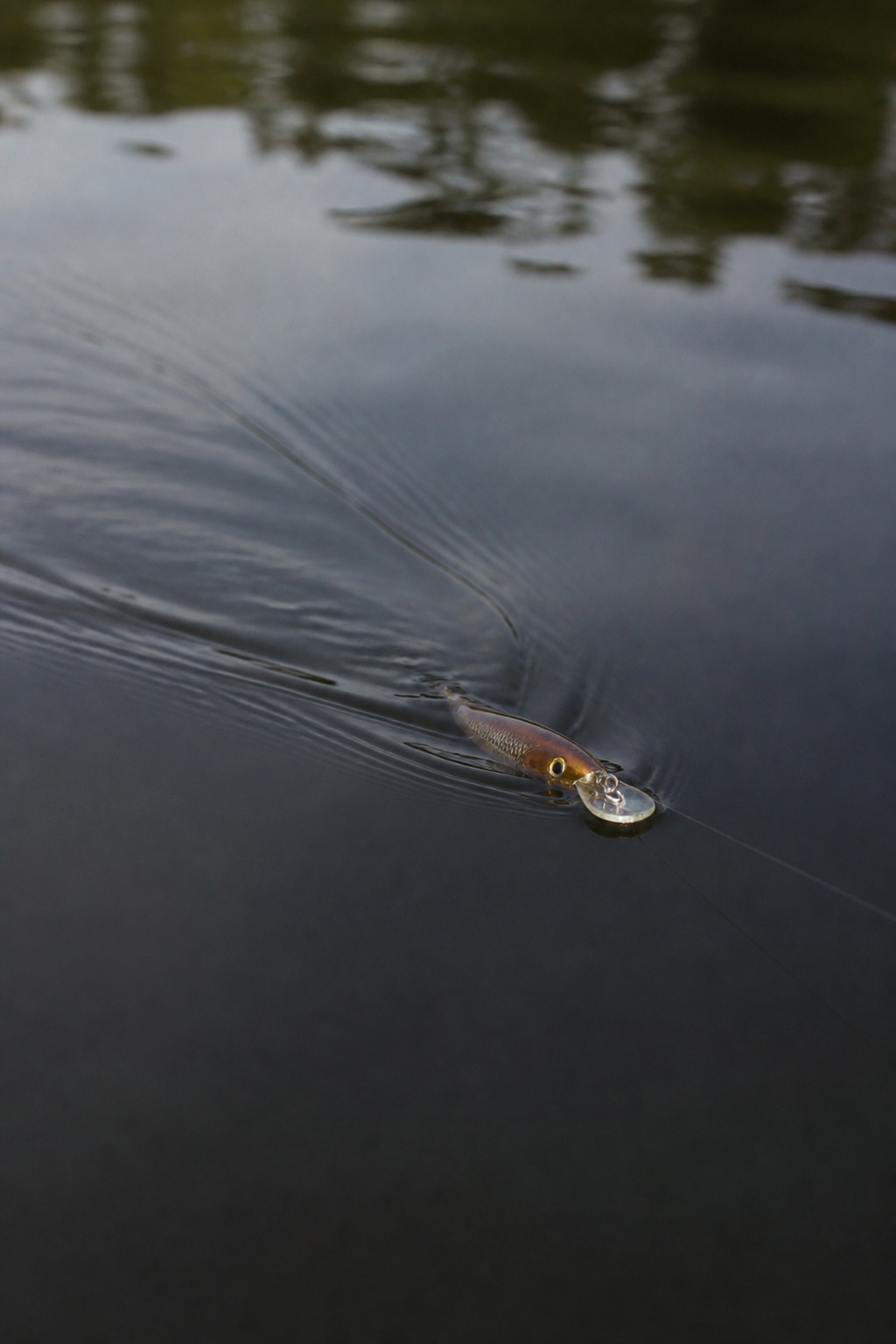
ArticleMetal lip swimmer: find the slow track
Metal lip swimmer: find the slow track
The metal lip is a small hydrofoil. It turns forward motion into a rolling track, but only when the body, lip, line and speed are working together.
A field guide to surfcasting tackle, water and build.
Reference / Swimming plugs
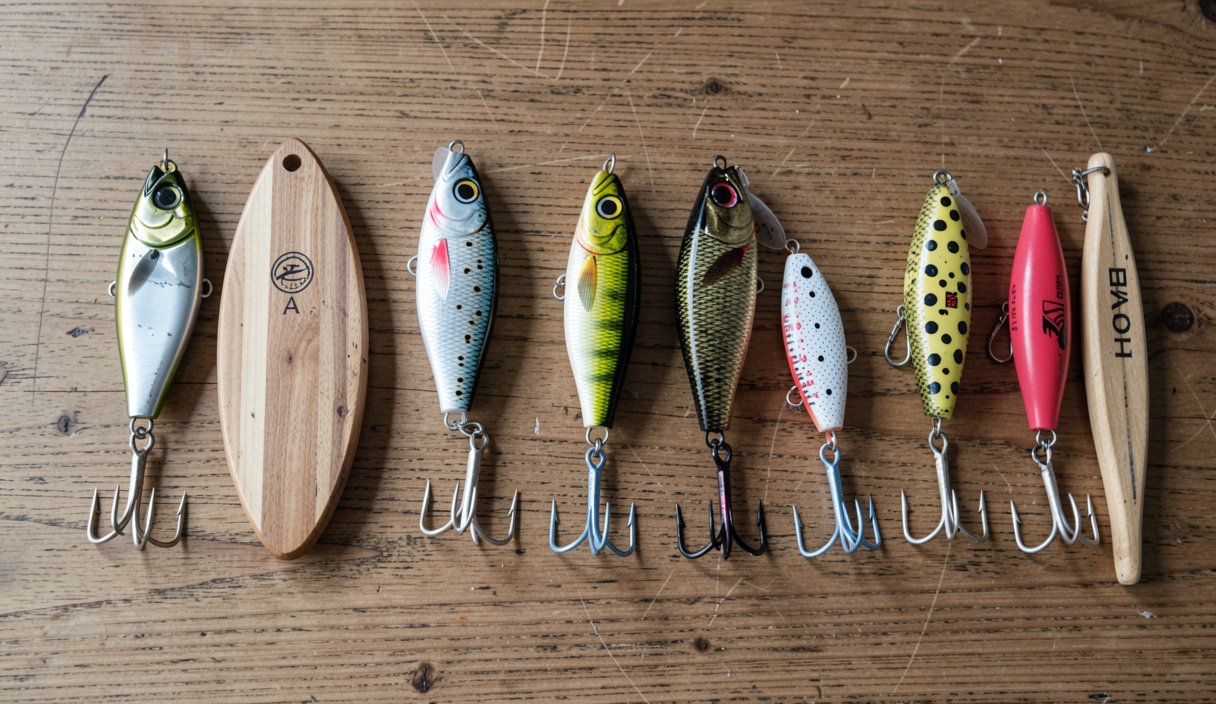
Metal lips, jointed bodies, slim minnows and wake baits turn forward motion into a controlled underwater or near-surface action.
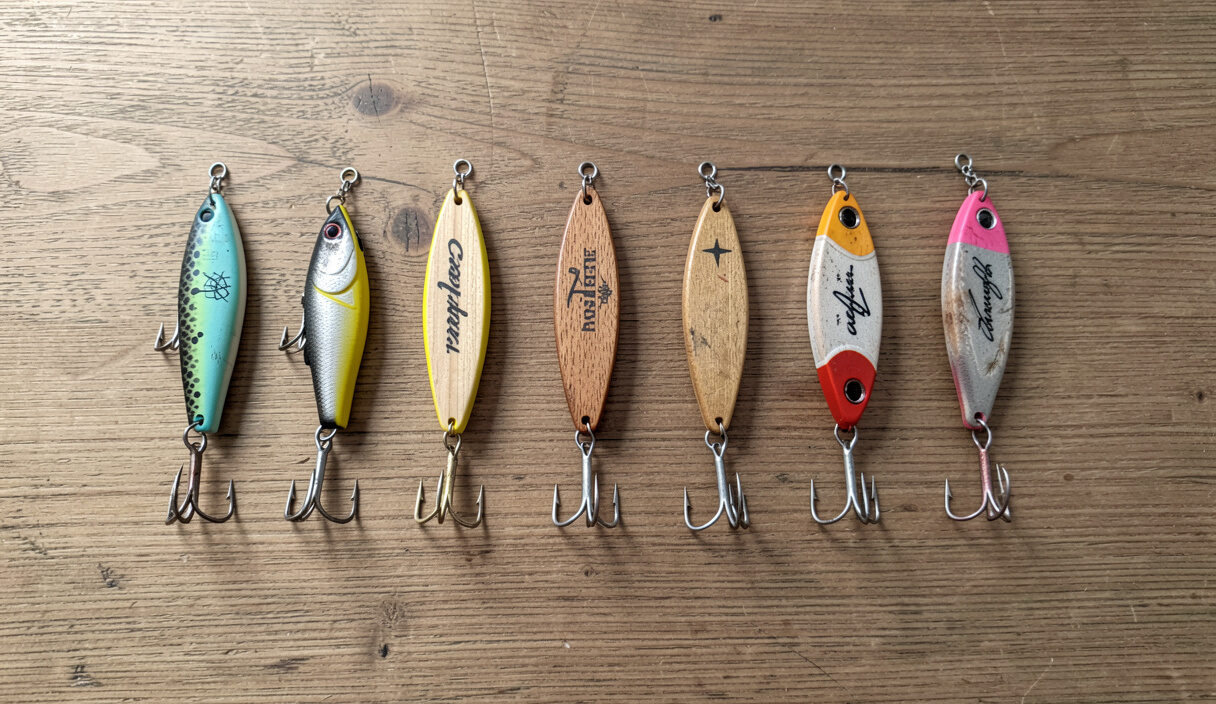
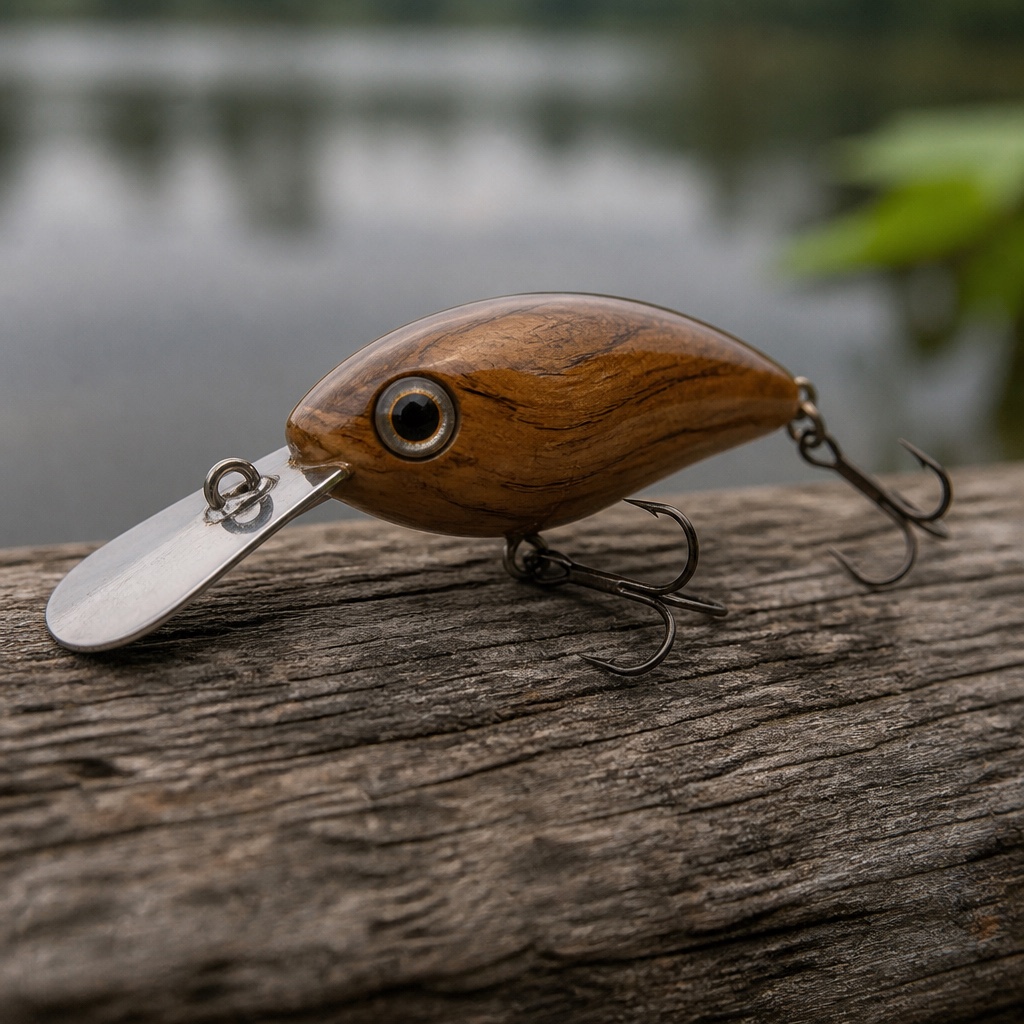
A swimming plug does not simply sink below the surface and hope for the best. A lip, joint or narrow profile changes how forward movement is translated into roll, wobble or wake. The lip angle decides how readily the plug bites, the body decides how much it resists, and the line angle decides how much of that action reaches the water.
That is why two plugs with similar silhouettes can feel unrelated on the rod. A wide metal lip often needs a slow, steady pace. A slim minnow can show a tighter action but lose casting comfort in wind. A jointed body may stay alive at a very slow speed while adding a hinge that must be rinsed and checked.
Anglers often ask how deep a swimmer runs as if the answer belongs to the lure alone. In practice the running depth is a relationship between lip geometry, retrieve speed, line diameter, rod angle, current and the shape of the bottom. A plug that works just under the film on a slack tide may dig more deeply when the line is held low into moving water.
Read the track beside you before committing to a dark cast. Look for a repeatable roll, a clean wake or the moment the plug starts to skate. If the action disappears, change one variable at a time. A small lip adjustment, a lower rod tip or a slower retrieve teaches more than swapping color immediately.
The metal lip swimmer is the reference entry because its behavior is easy to describe through feel: find the slowest pace that still gives a regular beat. The jointed swimmer and wake bait belong beside it because they solve different problems. When fast water takes control of a swimmer, change to a current shape rather than forcing the same lure to pretend it is a darter.
ArticleMetal lip swimmer: find the slow track
The metal lip is a small hydrofoil. It turns forward motion into a rolling track, but only when the body, lip, line and speed are working together.
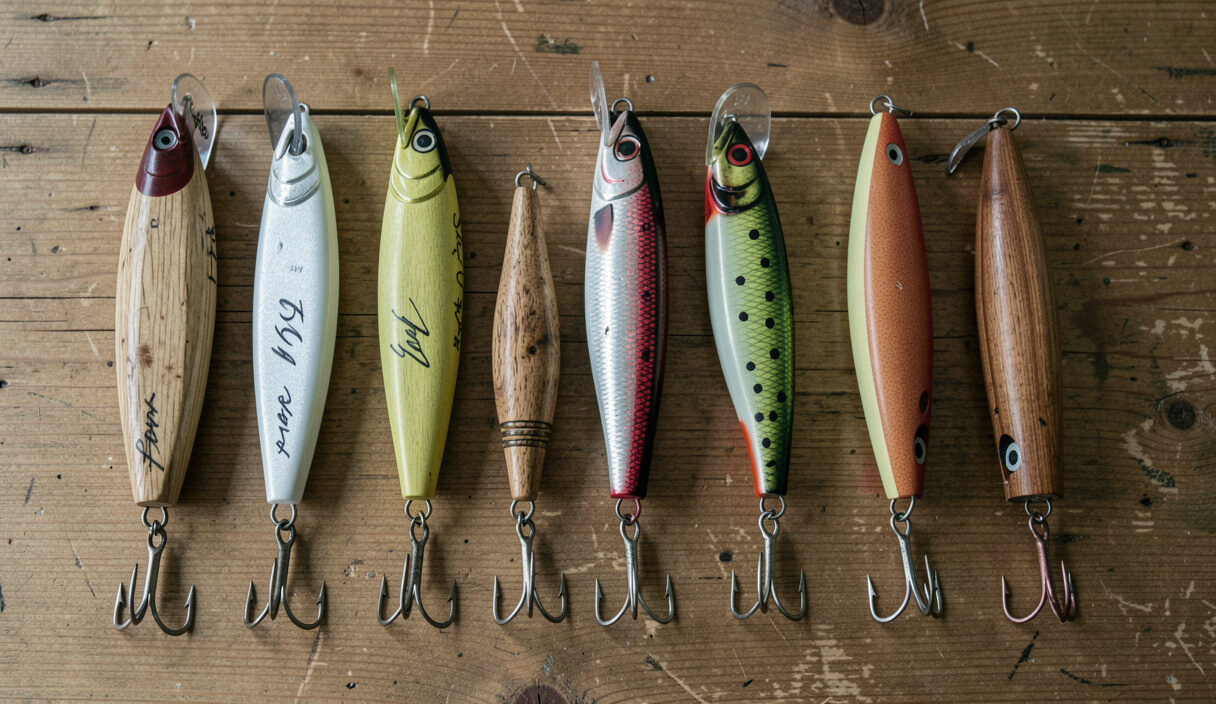
NextCurrent plugs
Darters, needlefish, bottle plugs and eel-skin bodies use tension and current differently from a calm-water swimmer.
NextWood and finish
A wooden body is a small changing structure. Density, moisture, wire, ballast and finish all alter how the finished plug behaves.
Sources, corrections, privacy and contact are part of the guide, not hidden behind the footer.