Fishing techniques / field note
Needlefish: the plug that needs your line
The needlefish is a useful lesson in restraint. Its narrow body can cast and hold a line, but it does not supply a dramatic wobble on its own.
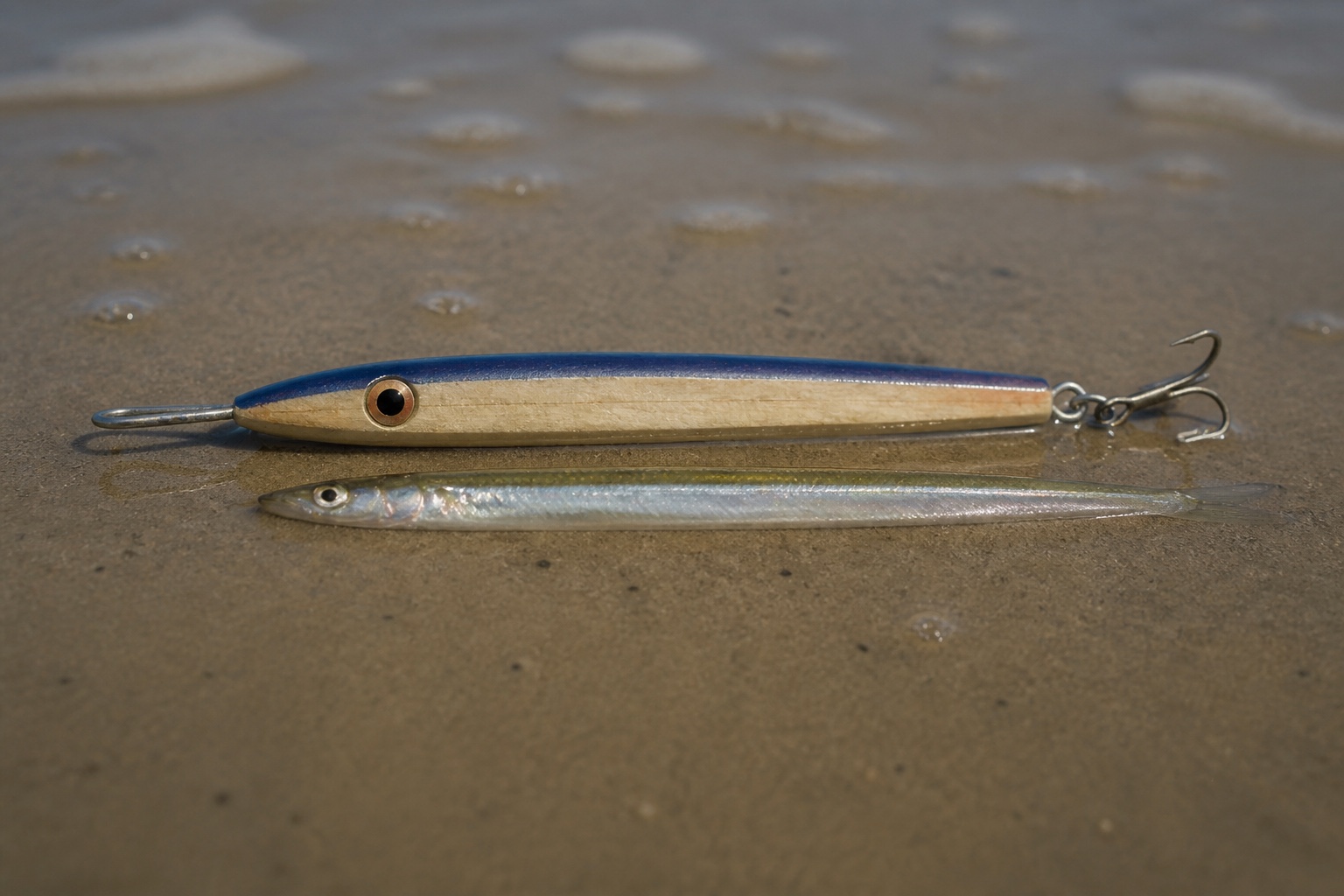
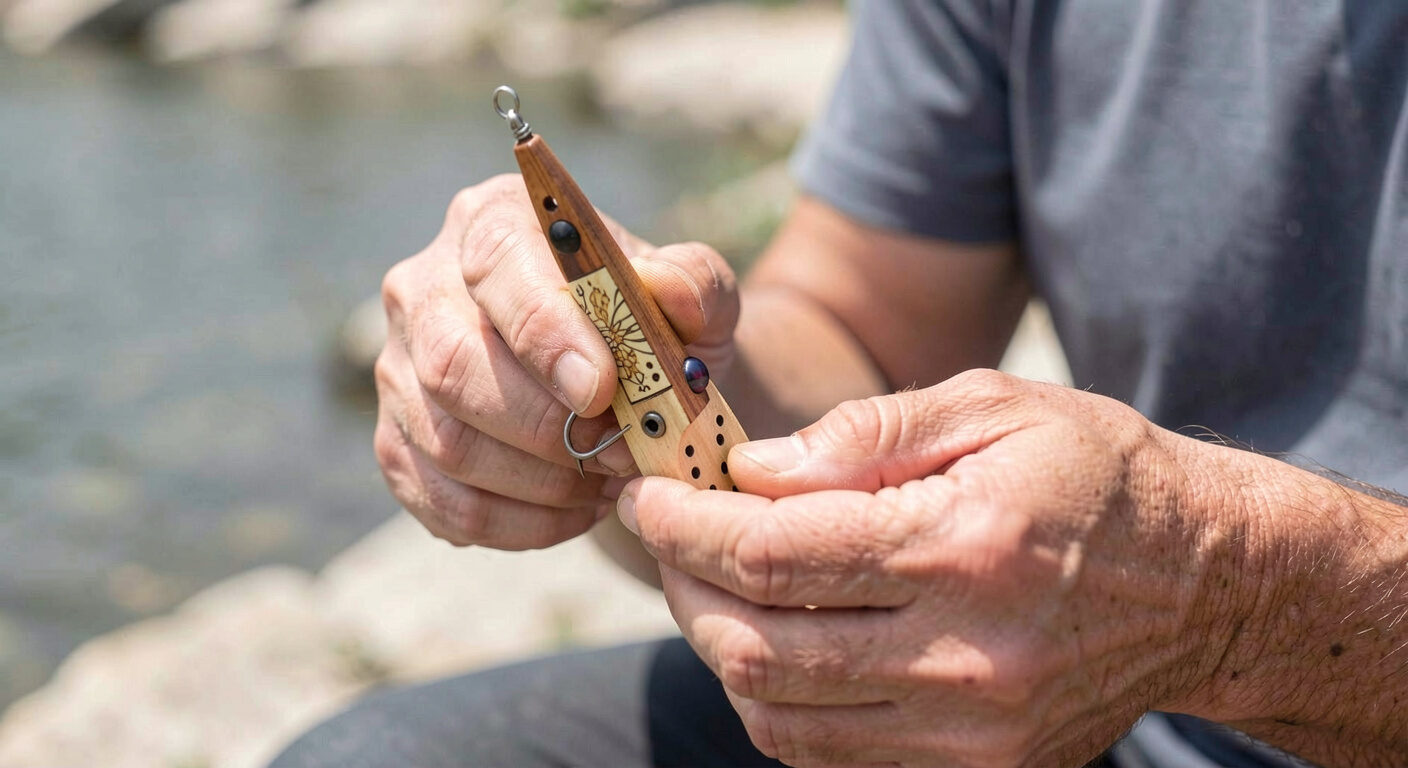
The lack of action is the point
A needlefish often looks almost unfinished beside a bulky swimmer. That is the design conversation. The slim body presents a narrow profile, while the line, current and rod movement provide much of the life. Floating and weighted versions can sit differently, but both reward an angler who notices what the water is already doing instead of adding motion by reflex.
Check the body for straightness and the hook hangers for clean alignment. A crooked line tie can make a quiet plug pull sideways. Because the shape has little built-in action to hide the problem, a small hardware error becomes obvious quickly. That makes the needlefish a helpful practice plug as well as a practical one.
Keep contact without rushing
Begin with a cast and a controlled retrieve that keeps the line from falling completely slack. The lure may appear quiet, but the line should tell you whether it is gliding, rising or being pushed. A small lift, a pause or a change in rod angle can supply enough movement. If the rod tip is working constantly, the plug is probably being asked to do too much.
The key is to repeat the same action for several casts. A needlefish can be fished with a slow straight retrieve, a gentle lift and fall or a current-assisted drift. The best version depends on body weight, line diameter, depth and the direction of flow. Use a note to separate what the body did from what your hands added.
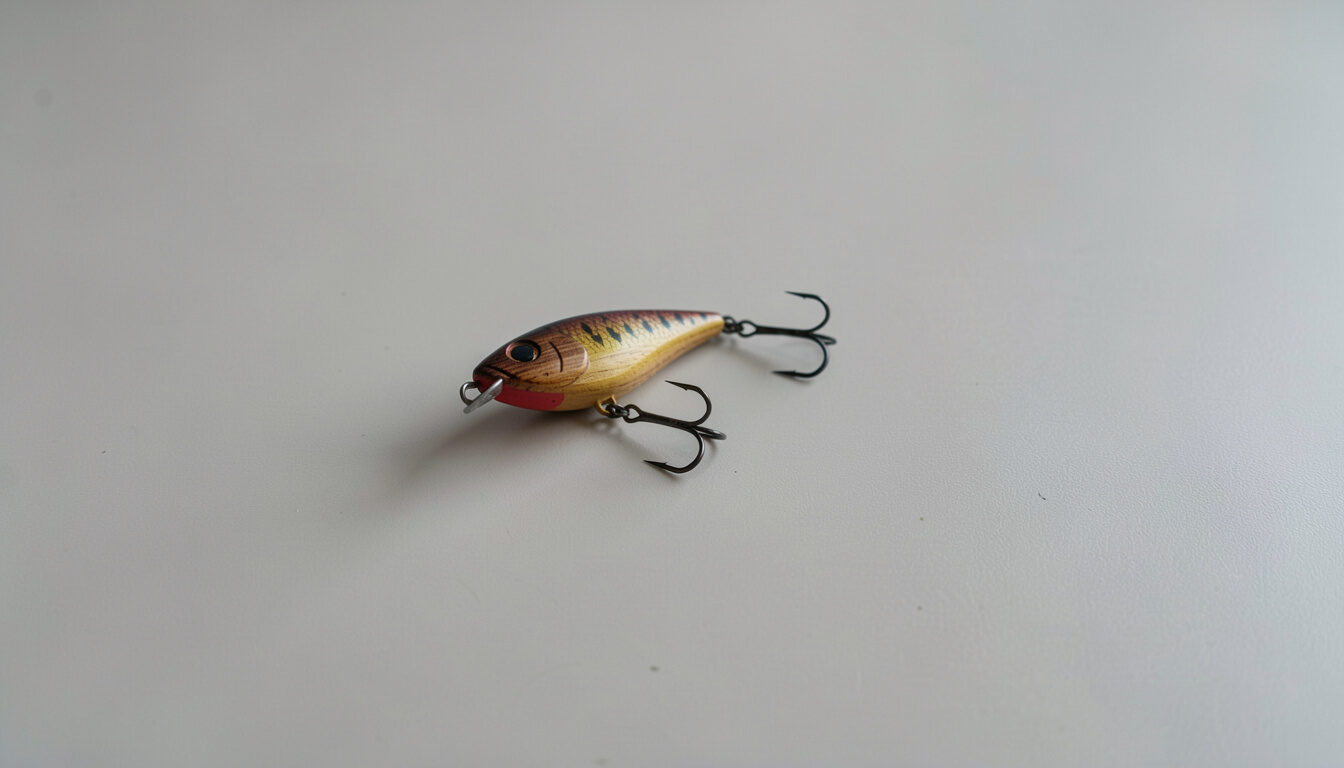
Use the current as a lane
In moving water, a needlefish can hold a slim presentation when a wider swimmer would get pushed around. Keep the line connected and look for the point where the current carries the body without pulling it straight to the surface. A cross-current angle can create a long, subtle track. A direct push may make the lure rise or swing too far.
If the line loses all contact, move the rod angle or choose a heavier body. If the plug starts skating, slow down or change position before changing the lure. The current entry explains the same decision in broader terms: choose a shape whose limits fit the lane.
Floating and weighted choices
A floating needlefish can stay near the film and show a different profile in a shallow lane. A weighted body gives more control when wind or current makes the line hard to manage. Neither is automatically the better version. Think about the depth you can safely read, how much contact the water allows and whether the plug can remain in the zone instead of simply moving past it.
When comparing two bodies, change one factor at a time. Do not swap a different hook layout and a different line at the same moment, or the lesson disappears. A small notebook entry is enough: body, hook arrangement, water movement, rod angle and what the line felt like.
A profile for uncertain nights
The needlefish is valuable when you want a slim, quiet shape and the water already provides movement. It is less useful when you need a lure to announce itself through heavy chop or when the bottom demands a pronounced lip. In those cases, a pencil or metal lip may give clearer feedback. The choice is not about a hierarchy. It is about what the line can keep honest.
Restraint of that kind is a temperament before it is a technique, and it is easier to admire in slower work. A French élevage canin Besançon measures its results in years; a needlefish only asks for a few quiet casts in a row.
A needlefish plug carries almost no action of its own, so the water has to supply it. Current across a slim body, line tension held against the drift, and deliberate rod work turn a straight swimmer into a working lure. Slack line kills the plug; too much tension drags it off course. Read the sweep, keep the rod tip low, and steer the plug through the seam rather than letting it ride. The same principle of one fixed protocol applied at set distances appears in 10 m and 30 m crossbow, where a single season governs both ranges.
A needlefish carries almost no action of its own, so the angler supplies it. Line tension keeps the slim body tracking; the rod tip sets the cadence, a slow lift then a drop that lets the plug swing on a slack inch. Current does the rest, sweeping the plug sideways where a swimmer would only wobble. Read the water before the cast: a tide that pushes across a bar, a rip that bends the retrieve. Cape Cod Bay month by month maps those shifts from Rock Harbor through Billingsgate Shoals, so the needlefish meets water that already moves.