Fishing techniques / field note
Pencil popper: cast, cadence and pause
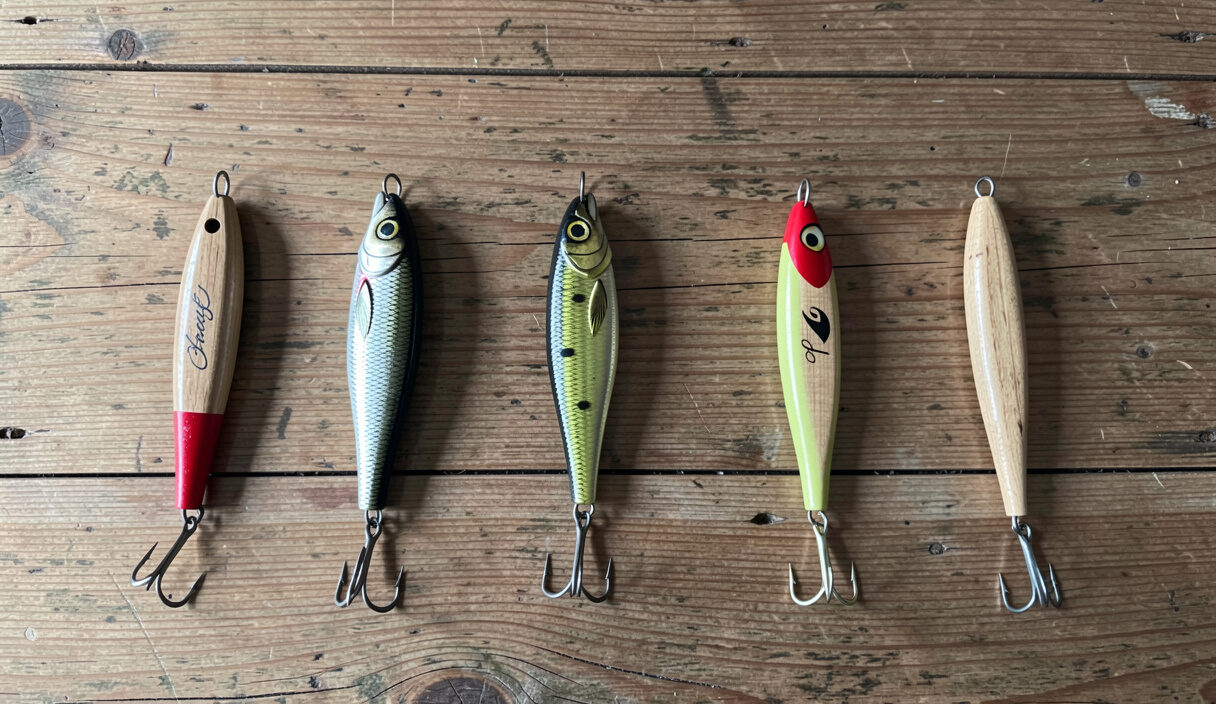
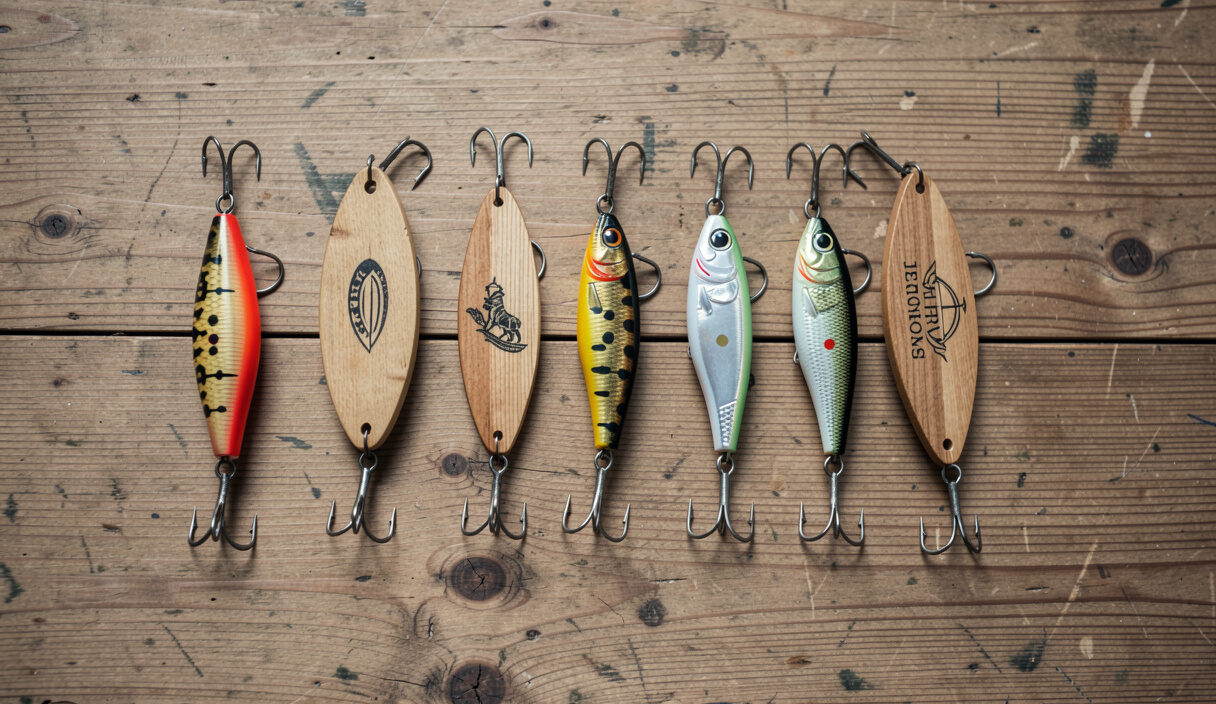
A pencil popper is a surface plug built around balance. Its tail weight helps it fly into wind, settle in a nose-up posture and respond to a rod tip without needing a deep cup or a diving lip.
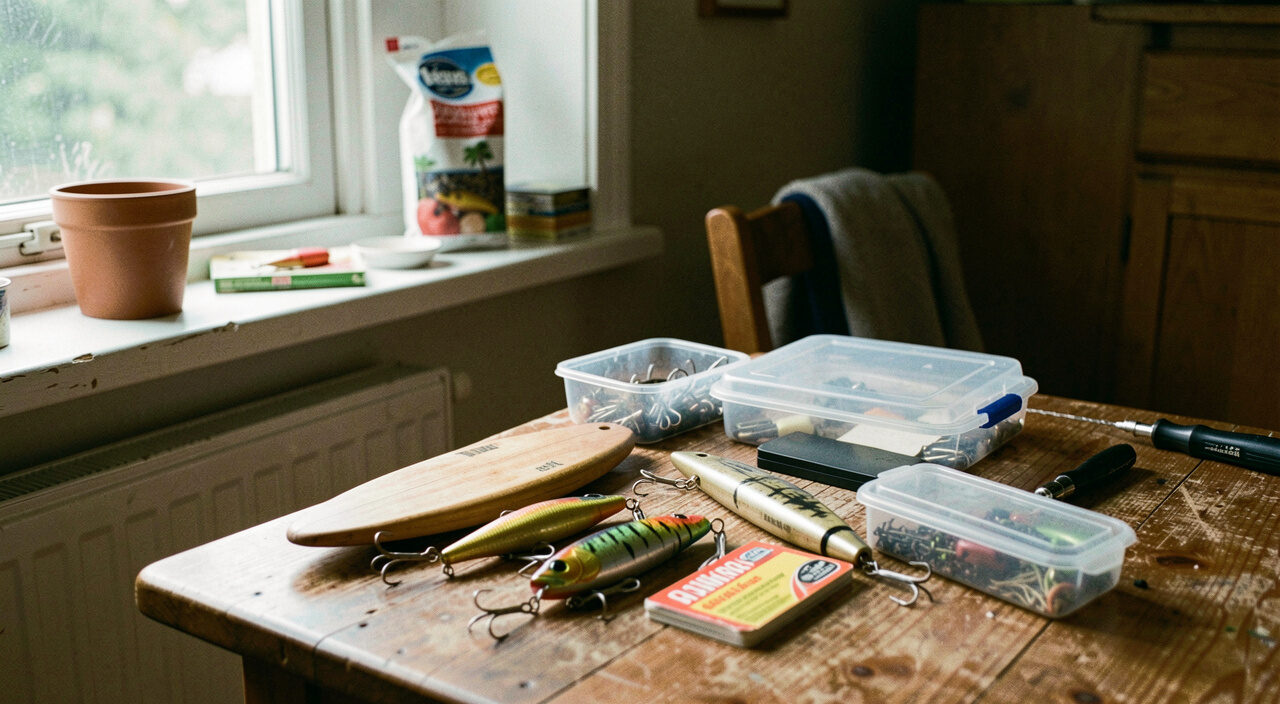
Read the body before the cast
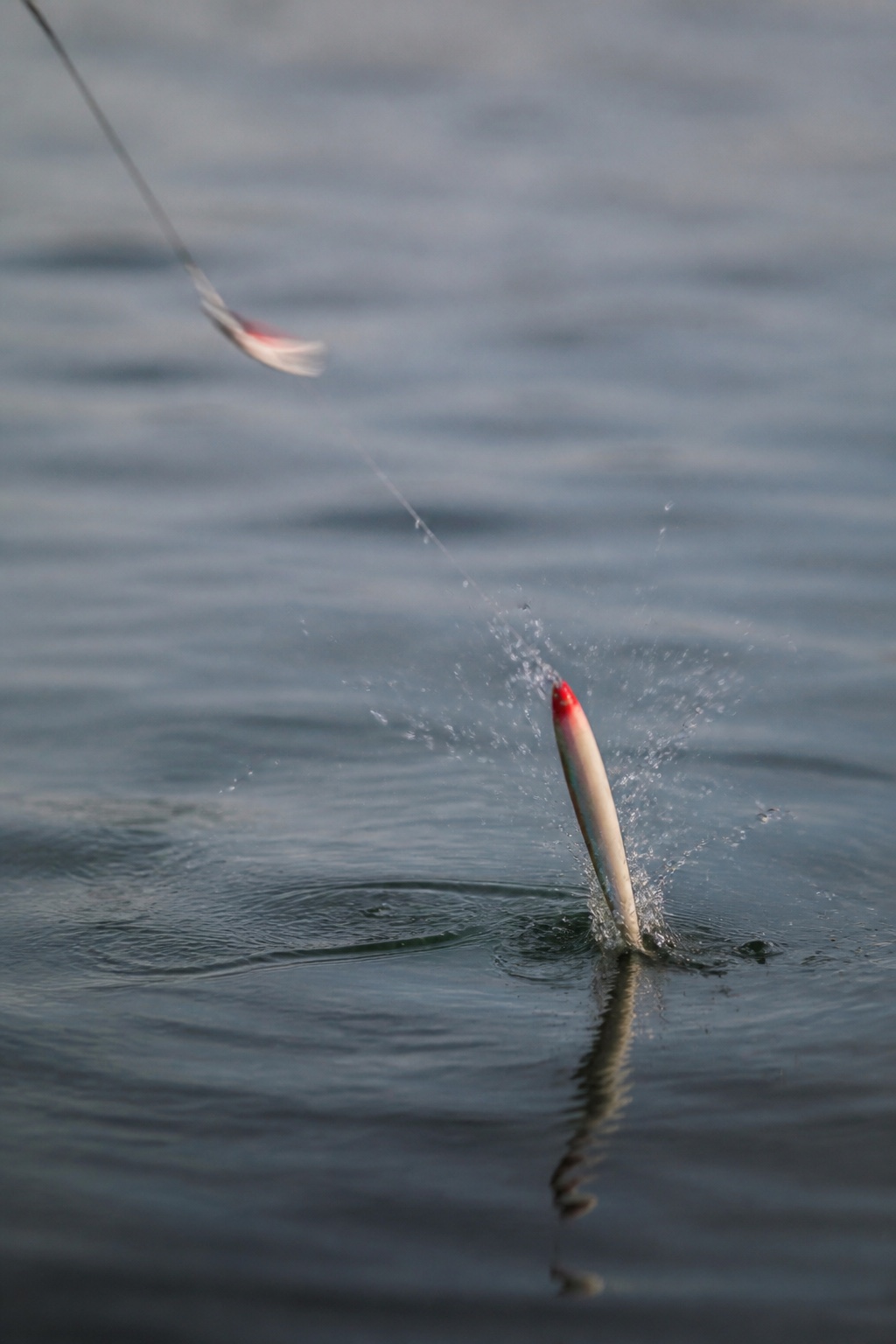
The long tapered body tells you what kind of surface movement to expect. The tail carries enough mass to make the cast comfortable, while the narrow nose can slap and skip when the line is tightened. At rest, many pencil poppers sit with the nose lifted. That position gives the first rod stroke something to work against, but it also means a high rod tip can make the lure look busier than intended. Balance held on almost nothing is studied far more carefully elsewhere: French dance writing on les pointes et le pied du danseur is about the same problem, with a far less forgiving material.
Check the hook hangers, line tie and tail weight before you decide how to fish it. A plug that has taken on water may sit lower and lose the clean separation between nose and tail. A heavy snap or oversized hook can do the same. The goal is not to preserve a showroom trim at all costs. It is to know what the plug is doing before the first useful cast.
Use the cast to buy time
The pencil shape earns attention in wind because its mass is carried toward the tail instead of spread evenly through a bulky body. That does not make it immune to a crosswind. Keep the cast smooth, let the plug straighten before the retrieve begins and avoid snapping the rod so hard that the lure arrives tangled with its leader. A controlled cast creates more useful fishing time than a dramatic one.
After splashdown, give the plug a moment to settle. The exact pause depends on the water and the body, but the principle is consistent: let the shape find its trim before asking it to move. Start with a short lift or sweep, then recover enough line to keep contact. If the plug is skating immediately, lower the rod and slow the first few turns rather than adding another violent stroke.
Cadence is a range
A pencil popper can be worked with a steady walk, a choppy spit or a simple lift and pause. The right cadence is the one that leaves the body oriented and gives the water a repeatable signal. In broken surf, a short stroke may be easier to keep connected than a long sweep. In a calmer lane, a longer pause can make the lure look like a baitfish that has lost momentum.
Watch the plug beside you when the water is clear enough. A useful walk has a pattern you can reproduce. An unhelpful thrash looks different on every stroke and puts the lure out of position before a fish can follow. Keep the rod angle consistent for several casts, then change one variable. That record is more useful than trying a new trick on every retrieve.
Choose water with room on top
Surface plugs need a lane where their action can be seen or felt. A clean edge beside a bar, the shoulder of a cut or a shallow flat with a manageable wind can give a pencil space to work. If waves are breaking directly over the lure or the current is turning the body sideways, the limitation is not your cadence. It is the water asking for another family.
This is where the surface directory and the surf-conditions notes meet. A pencil can be a strong first choice when casting distance and topwater presence matter, but it is not the universal answer for every dark shoreline. Describe the surface, direction and line angle before you decide the lure has failed.
Hardware is part of the action
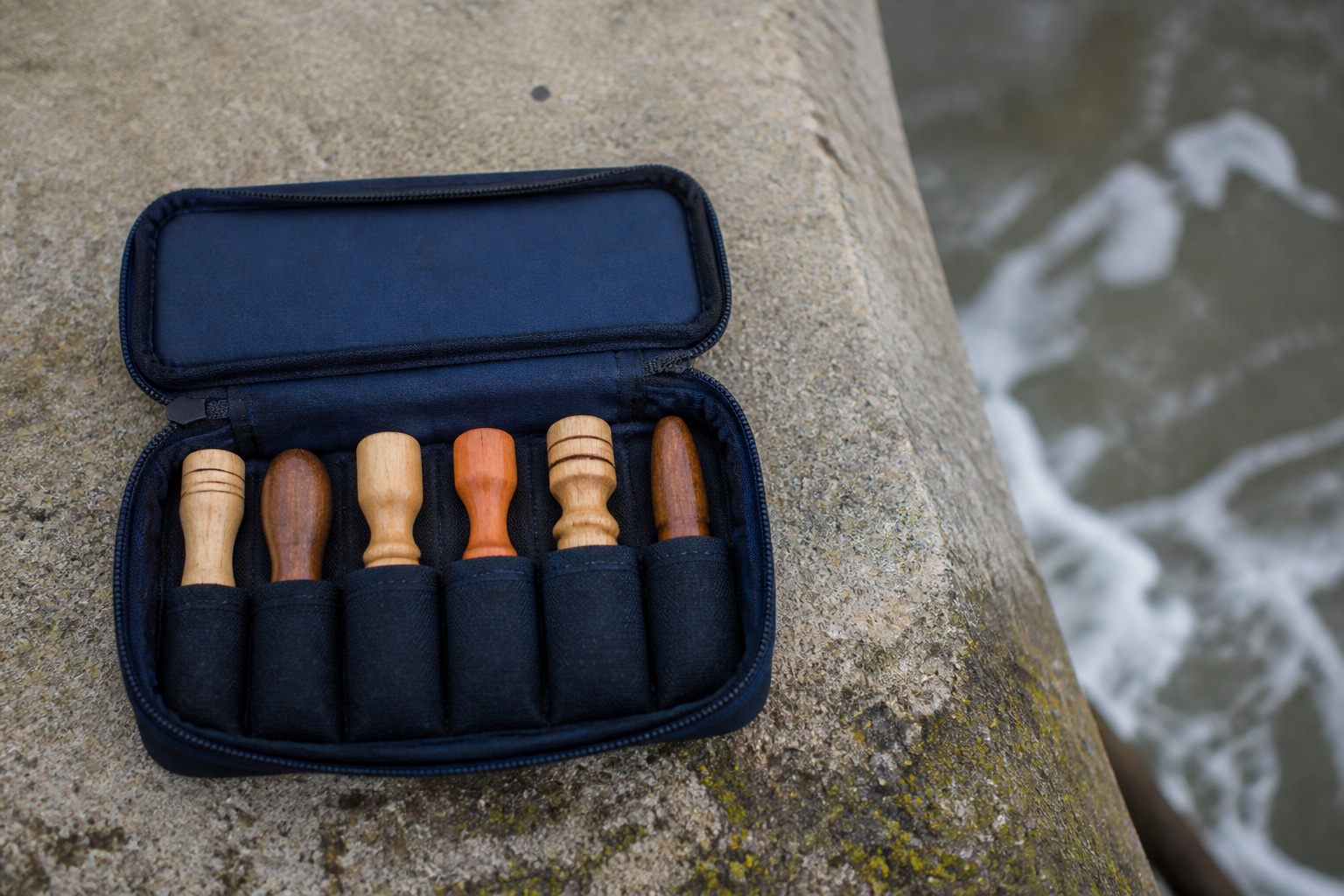
Hooks and split rings change the balance at the tail and belly. A larger hook can make the plug sit lower, while a stiff leader can restrict the nose. Inspect the connection after a rough session, rinse salt from the hardware and replace a ring that opens under hand pressure. A pencil popper does not need precious treatment, but it does need consistent hardware if you want to learn its range.
Keep a note of the trim that worked. Record the hook arrangement, leader length and the water state in ordinary words. The note is useful later because the same body may be fished in a different current or with a different line. A short description turns a good cast into knowledge rather than memory.
When to change families
Change from a pencil when you cannot keep a repeatable surface track after checking line angle and speed. A metal lip swimmer can offer a slower roll below the film. A darter can use a moving lane that makes the pencil skate. A needlefish can stay connected when you need a slim profile and less built-in action. The change is not a judgment on the pencil; it is a response to what the water will allow.
The best pencil popper session usually ends with a clear reason for the next choice. Write down what the plug did, what the waves did, and what you changed. That is the kind of field note another angler can use.
A tail-weighted pencil popper loads the rod on the back cast and flies nose-first, so distance comes without a wild tumble. Once it lands, the same weight sits low and lets the plug walk: short taps with the rod tip, line kept tight, a pause long enough for the nose to settle. Wind and current decide how long that pause should be. Reading moving water is the same skill that governs sea kayak re-entry, where wind, current and cold water set the plan before anyone leaves shore.
A tail-weighted pencil popper loads the rod on the back cast, so the plug carries into wind where a lighter surface lure stalls. Once it lands, the walk comes from the rod tip, not the reel: short taps keep the nose swinging, a longer sweep makes it slide, and the pause lets it sit. Distance only matters if the plug stays under control at the end of it. Judging that balance is much like working dog trials, where a score out of twenty records how a dog handles range, pace and steadiness on the ground.
A tail-weighted pencil popper loads the rod on the back cast and carries into wind that floats a lighter plug, which is why it holds a place when the fish sit past the bar. The weight sits behind the belly, so the nose rides high and the walk starts on a slack line: two short pulls, then a pause long enough for the plug to swing back on its own. Cadence and pause are the whole lure. Rules govern timing the same way, and the muaythai and kickboxing rules in the Netherlands show how counted rounds and a five-second clinch set the rhythm of a fight.
A tail-weighted pencil popper earns its place when the fish sit past the bar and the wind pushes against the cast. The weight at the rear loads the rod on the back cast and carries the plug nose-up through the air, so distance comes without a wide loop. On the water it walks with short rod taps, the tail holding the head high, and the pause is where most strikes happen. Reading a range protocol, one season and one rule family per class, works much like this, as Swiss crossbow sport sets out at 10 m and 30 m.
A tail-weighted pencil popper loads on the back cast, so the plug turns over against wind and lands nose down, ready to walk. Cadence comes from the rod tip, short pulls that make the tail swing wide, and the pause is where the strike happens. Distance and control are the same problem seen twice, and the same thinking shows up away from the water, in the court dimensions and the three-step rule of an indoor handball court, where space and timing decide the play. Read the water, then set the rhythm.
A tail-weighted pencil popper loads on the back cast and turns over into wind that flattens lighter surface plugs. The weight sits behind the line tie, so the nose rides high and the tail kicks on a slow retrieve. Cadence does the walking: two quick turns of the reel handle, then a pause long enough for the plug to settle. Distance and control rarely arrive together, and the same patience applies to a lost ball or a ball out of bounds, where the penalty area rules reward a slow read over a rushed drop.
A tail-weighted pencil popper loads on the back cast, so the blank does the work and the plug stays on line in a headwind. Once it lands, the same weight keeps the tail down and the nose up, and a steady retrieve with the rod tip high walks it side to side. Cadence matters more than speed: two quick turns, then a pause long enough for the plug to settle. That pause is where most strikes come. Distance and control are separate skills, and the same holds for street theatre logistics, where a small touring show lives or dies on the space it is given.
A tail-weighted pencil popper loads the rod on the back cast and carries into wind that floats and light heads cannot reach. Once it lands, the weight sits behind the belly, so the nose lifts and the plug walks with short rod sweeps, then stalls on a pause long enough for a fish to commit. Distance and control are the same argument: cast it far, work it slow, and keep the cadence readable in chop. Reading a place before fishing it is the same habit that shapes Cabo de Gata dive sites, where depth and level decide what the water will show.
A tail-weighted pencil popper loads on the back cast and carries into wind that stops lighter surface plugs, so the rod does the work while the wrist stays quiet. On the retrieve the tail sits low, the nose lifts, and short taps of the rod tip walk the plug without pulling it under. Cadence matters more than speed: two quick taps, a beat of slack, then a pause long enough for the plug to settle. Reading when a flat holds fish comes down to water and timing, and rock harbor tides navigable window is where that calendar is laid out month by month.
A tail-weighted pencil popper loads on the back cast and carries into wind that stops lighter surface plugs, so distance comes from the blank rather than from muscle. Once it lands, the rod tip walks the plug left and right while the reel takes up slack, and the pause is what draws the strike: stop the walk, let the tail settle, then start again. Reading how a fish commits to that pause is close to how a herding instinct test reads a dog meeting stock, since both depend on watching behavior rather than forcing it.
A pencil popper earns its place when the fish sit far off the rocks and the water will not let you wade closer. The tail weight loads the rod on the back cast, so the plug travels into a headwind without tumbling, and the cupped face spits and walks when you keep the rod tip high and the retrieve steady. Cadence matters more than speed: two quick turns, then a pause long enough for the plug to settle. The same patience applies away from the water, as anyone learning to teach a child to swim in cold, calm conditions will recognize.
A tail-weighted pencil popper loads on the back cast and carries into wind that stops lighter surface plugs, so it earns its place when distance and control matter more than subtlety. The weight sits aft, the nose rides high, and a steady retrieve with the rod tip low walks the plug side to side; a pause lets it swing, then the next pull restores cadence. Reading a long, looping course of water works the same way, and the Snaefell Mountain Course shows how named corners and a clockwise lap shape a line from start to finish.