Fishing techniques / field note
Metal lip swimmer: find the slow track
The metal lip is a small hydrofoil. It turns forward motion into a rolling track, but only when the body, lip, line and speed are working together.
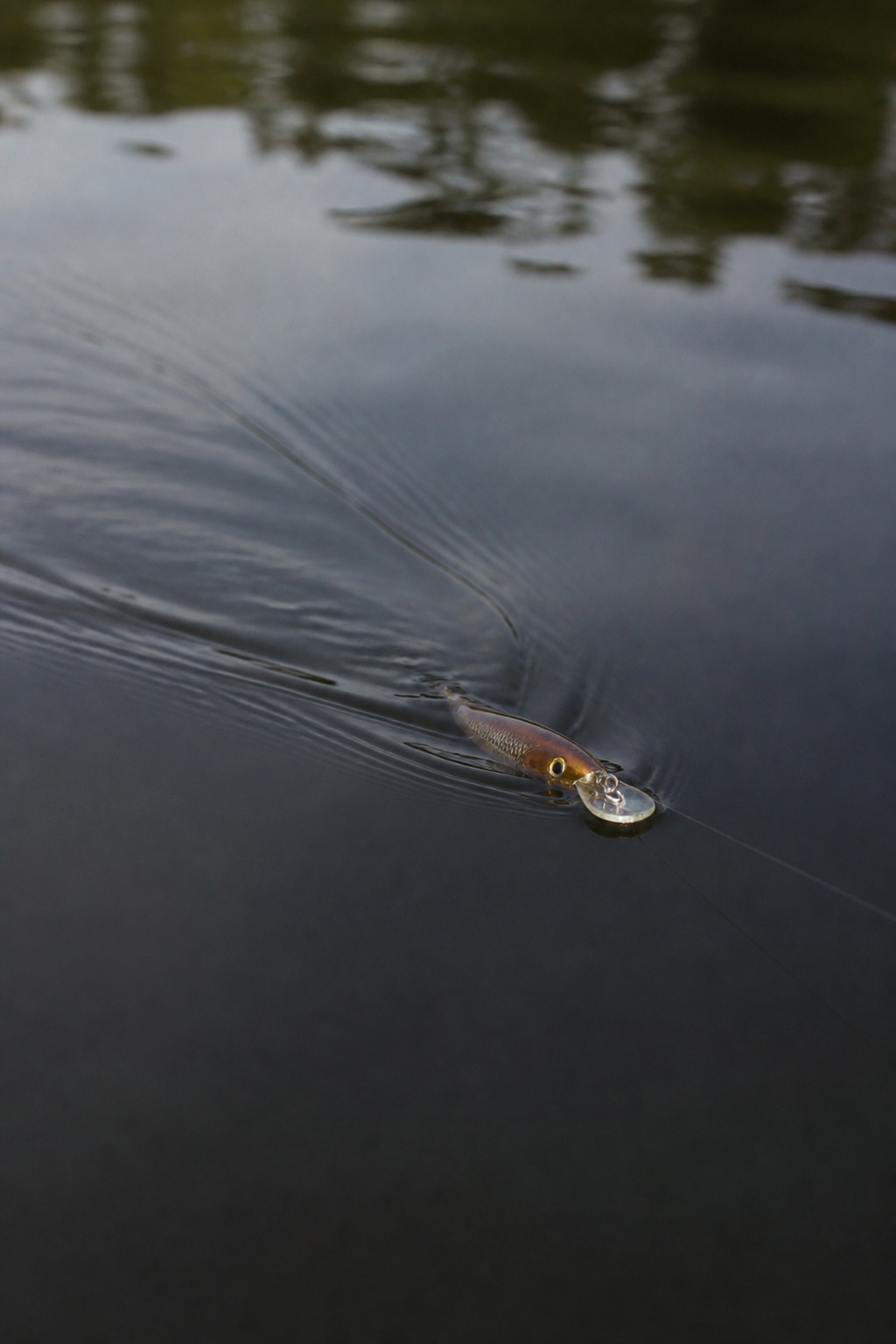
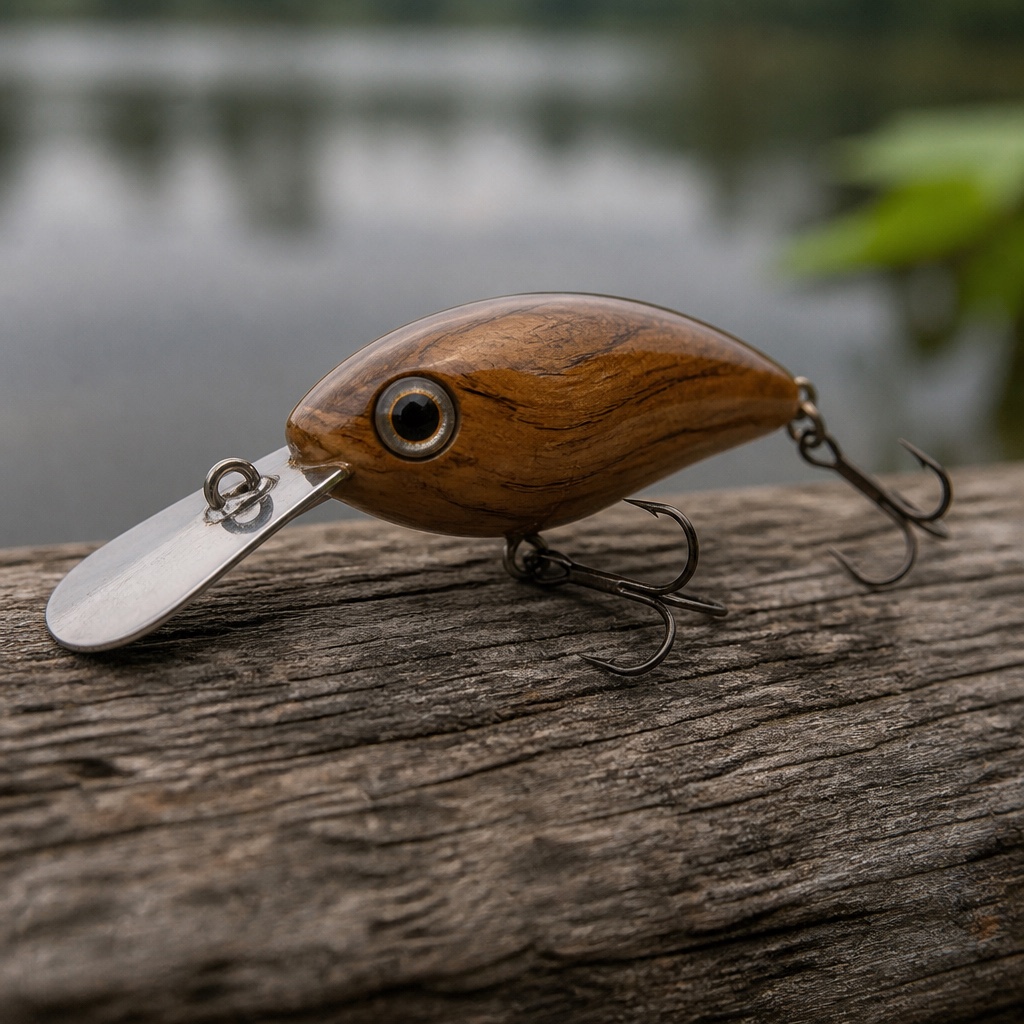
The lip turns speed into action
A metal lip swimmer is often described by the shape of its roll, but the more useful starting point is the relationship between the lip and the water. The lip catches flow, the body resists it, and the line holds the plug on a path. Change any one of those and the action changes. A lip bent a few degrees, a different hook arrangement or a lower rod tip can move the plug from a clean roll to a skid.
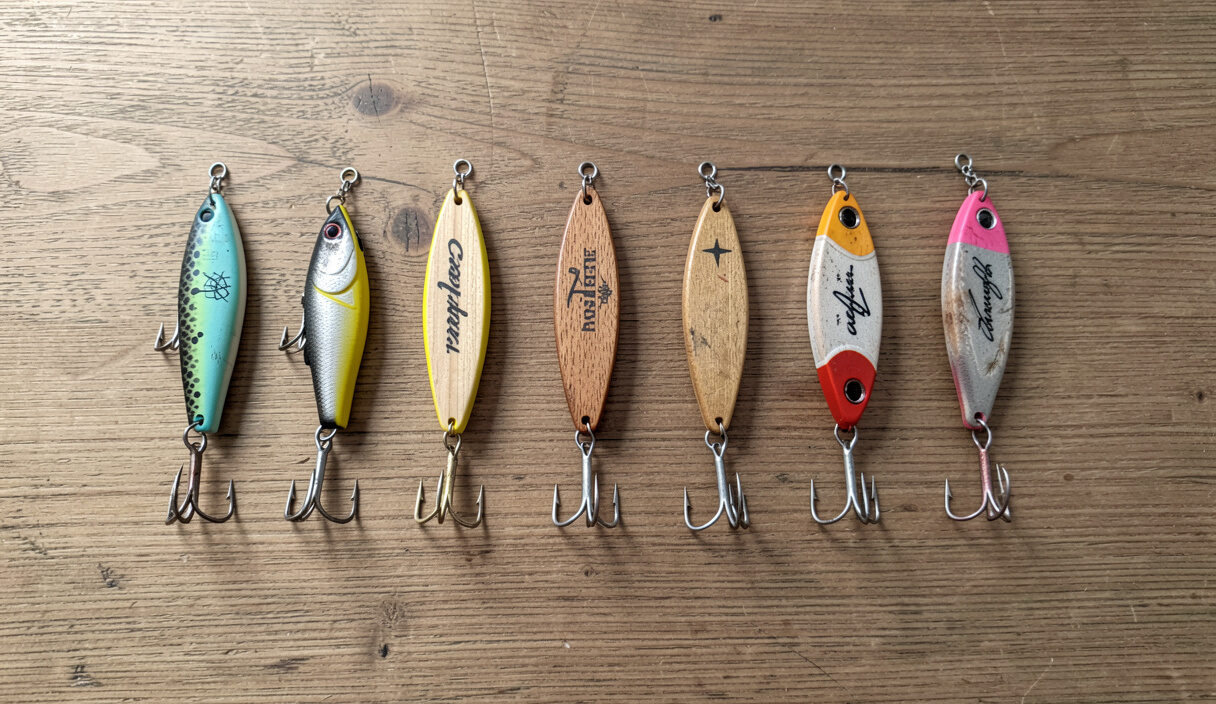
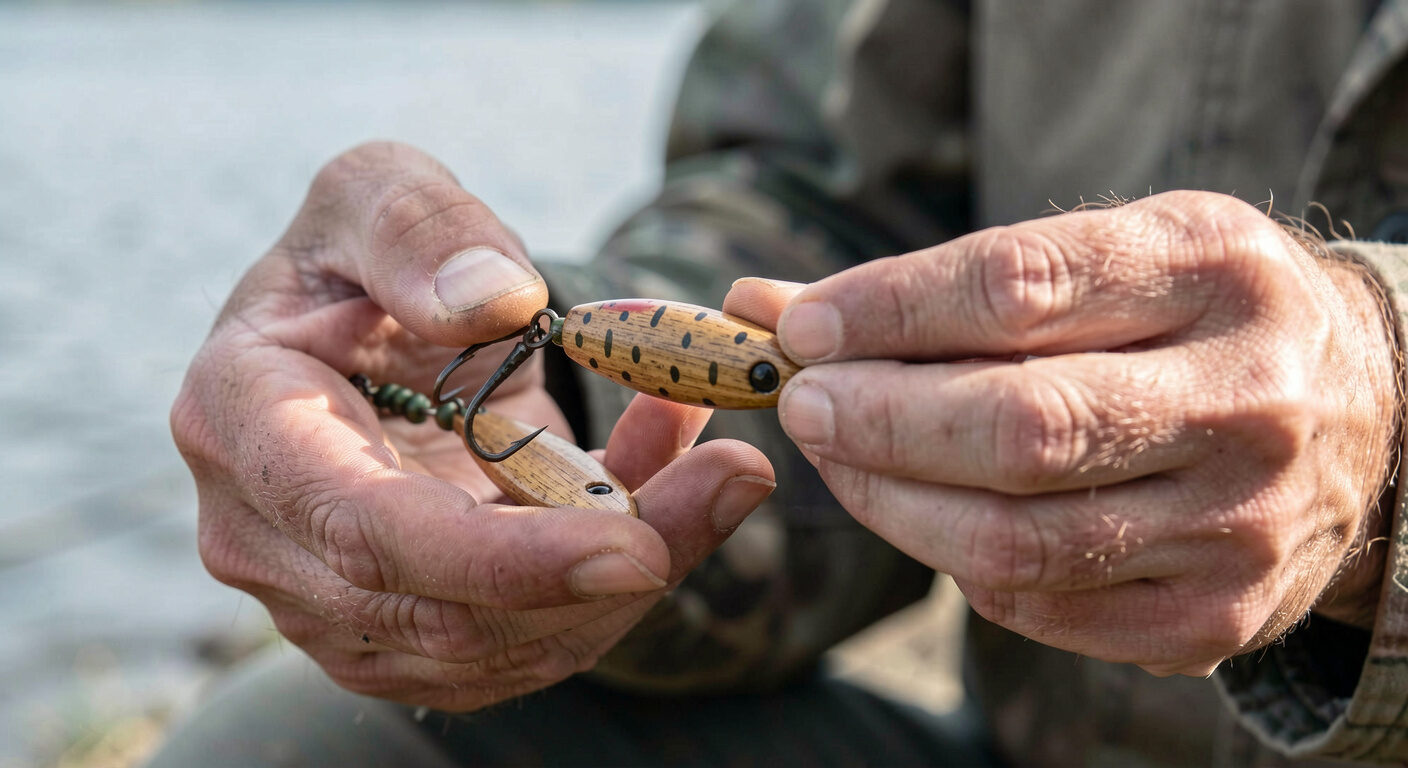
Look at the lip slot and line tie before fishing. The metal should sit securely, the wood around the slot should be intact and the eye should not be twisted. A body that has absorbed water may sit lower, making the same retrieve feel heavy. These checks are not a ritual. They tell you whether the result belongs to the design or to damage.
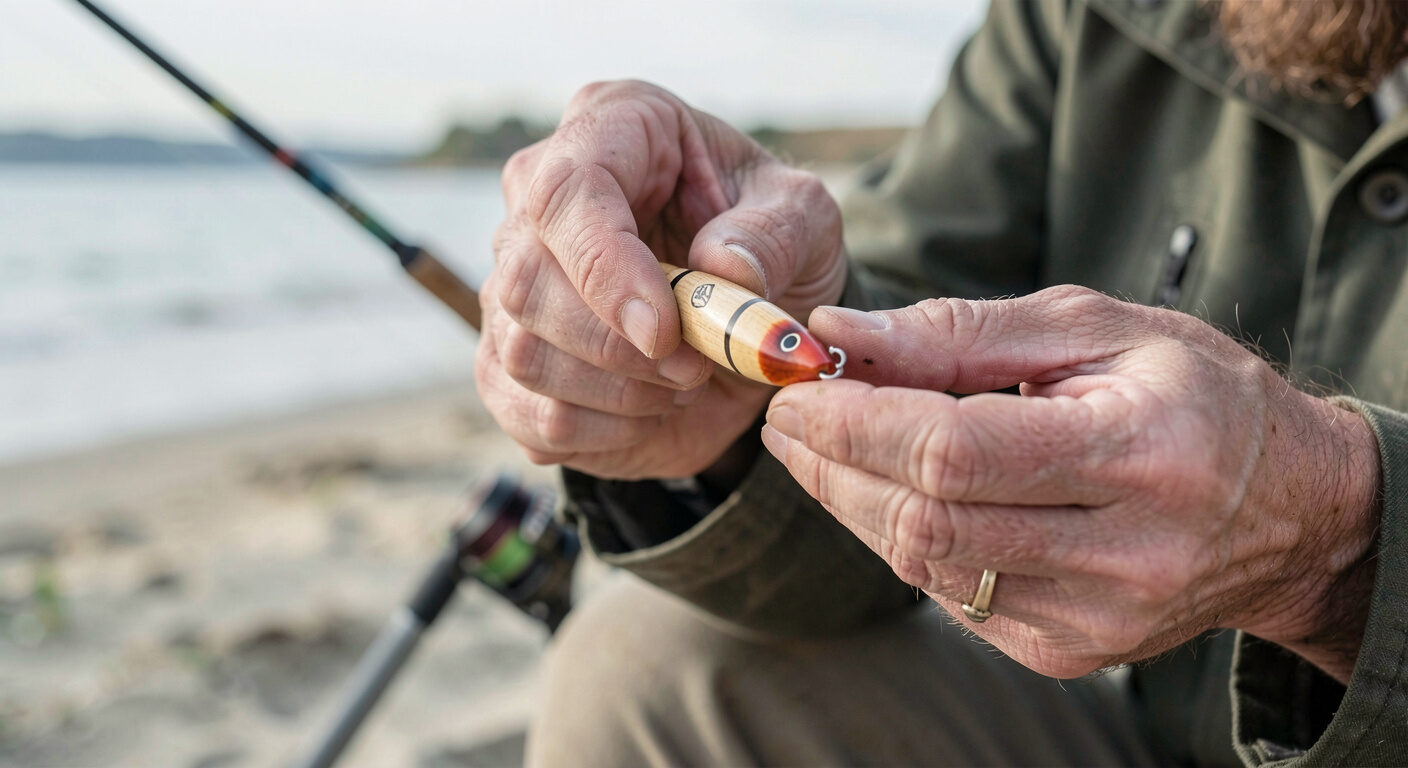
Find the slowest useful speed
Start with a cast, a short pause and a slow retrieve. The first goal is not distance or depth. It is a repeatable beat through the rod. When the plug rolls, you should be able to feel a regular pulse or see the body return to the same side-to-side rhythm. If the line goes slack, the lip cannot stay engaged. If the retrieve is too fast, the plug may rise or blow out.
Once the slow track is found, keep it for several casts before changing anything. Anglers often speed up because the lure looks quiet from above, but a restrained roll is part of the appeal in calm water and at night. Let the plug cover water while the line remains connected. The hand should turn the reel, not race it.
Tune with small steps
If the swimmer tracks to one side, inspect the line tie and the lip before bending anything. A small correction can restore a centered path, but a large bend changes depth and speed tolerance at the same time. Work close to the lip and support the wood. Do not use the slot as a lever. Test after each adjustment at the speed you intend to fish, not at a faster pace that makes every change look exaggerated.
A lip angled down can make the plug dig and roll harder. A lip angled up can make it run shallower and tolerate more speed. Neither direction is automatically better. The useful setting is the one that keeps a stable track in the water you actually have. Write down the change because memory is poor when several small bends happen in one session.
Match the swimmer to the bottom
A slow swimmer earns room over shallow ground, sand flats, boulder edges and the back of a bay where a deep-running plug would foul. Keep the rod angle and line direction in mind. A low tip can bring the lip into the water sooner, while a raised tip can lift the track over a shallow section. The point is to steer the action without forcing the retrieve.
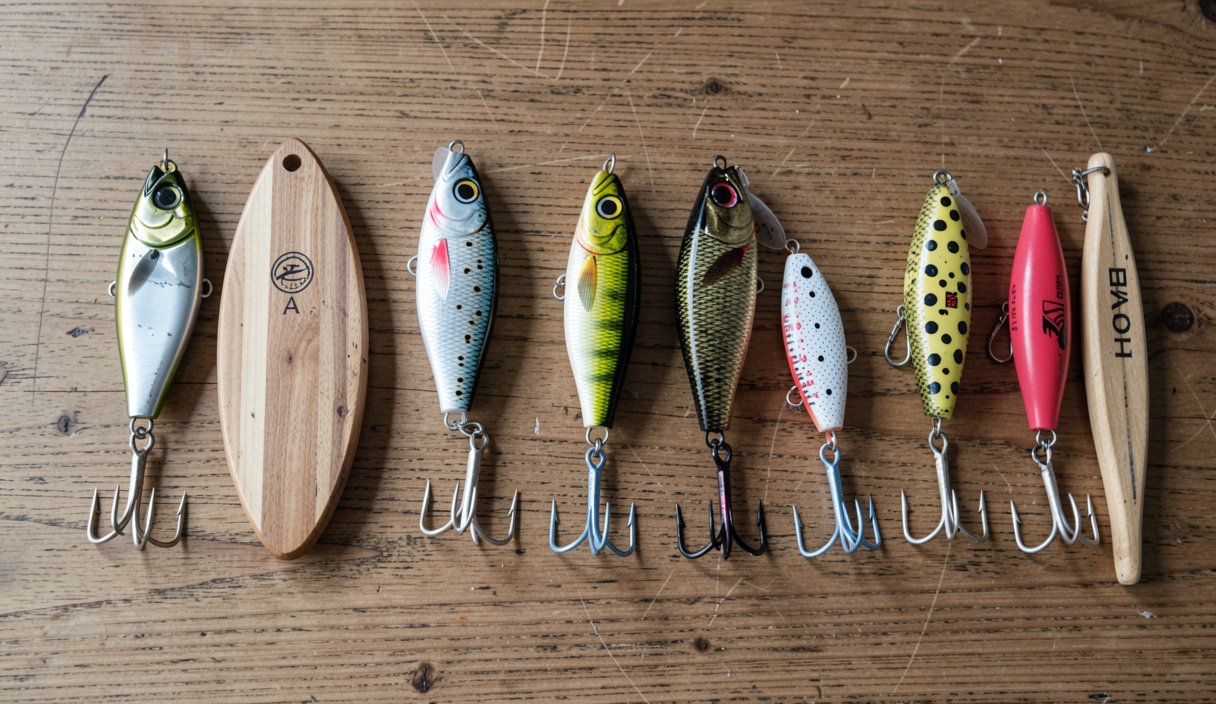
In fast water the same body may skate or lose its roll. Move to a darter or a needlefish when the current is supplying too much pressure for a clean swimmer track. Reading the surf first makes that change feel like a planned choice rather than a rescue.
Maintain the weak points
The lip slot, line tie and finish around the hook hangers deserve attention after salt water. Rinse, dry and inspect the surface for a hairline crack. A swimmer that feels heavier or sits lower at rest may have taken on water. Do not keep tuning around a body that has changed. Repair or retire it, then compare the repaired plug against a known dry example.
Hardware also changes the trim. If a hook is replaced with a heavier model, fish the body again before assuming the old retrieve still applies. A written note with the hook layout, lip angle and water state gives the next session a starting point.
The quiet advantage
The metal lip swimmer is valuable because it can cover a night shoreline with very little disturbance while still giving the angler feedback. It is a patient lure. When the water is calm and the track is slow, the absence of drama is a feature. Let it work until the water tells you otherwise.
A metal lip swimmer rolls on its side before it bites, and that roll is the tell. Tune in small steps: bend the lip a hair, file the line tie, swap a hook for lighter wire, then cast again in the same current. Calm water shows the slow track best, because the plug holds its wobble instead of being shoved by chop. Read the roll the way a judge reads marking a spaniel run, one small correction at a time, and the swimmer will tell you when the lip is right.
A metal lip swimmer rolls on its side rather than wobbling, and the roll is what the fish see. Tune it in small steps: bend the lip a hair, swap the tail hook for a lighter one, and test the track beside the boat before you cast. Calm water gives it the advantage, because a slow retrieve keeps the lip working and the plug on its side. The same patience with small details applies to touring company paperwork, where a short checklist of playing areas, capacity and safety thresholds keeps a small show moving.
A metal lip swimmer rolls on its side before it bites, and the roll is the tell: too much lip and it digs, too little and it skips. Tune in small steps, bending the eyelet a hair at a time, and test each change on a short cast before the next. Calm water gives the plug its advantage, because the slow track holds a steady wobble where chop would break it. Learning to read that slow track is much like learning front crawl and breaststroke: patience, small corrections, and a calm start.