Field notes / field note
Reading the Loire in Touraine: Depth First
A guide to reading the Loire in Touraine by depth layers, from sand margins to bridge pools, and how each layer sets species, lure and lead.
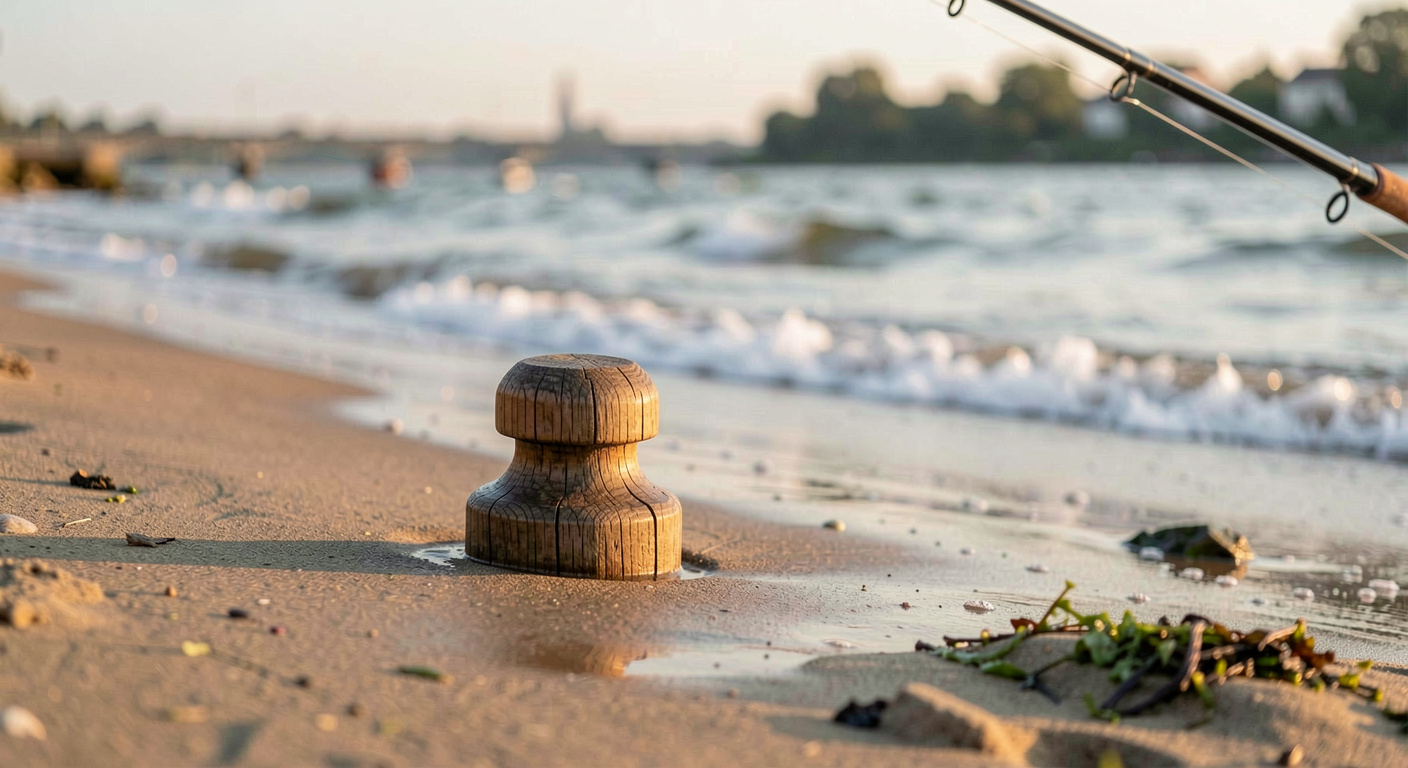
The Loire in Touraine is best read from the bottom up: depth decides the species, the lure and the lead. A sand margin under a metre of water holds black bass and teaches how to read a take, while a current seam and a bridge pool hold carp and catfish. The same river, the same morning, three different games.
Why does depth decide the lure?
Depth decides the lure because each layer of water gives the fish a different job. On the sand margin, in less than a metre, the fish are looking up and sideways, so a surface or shallow-running lure keeps contact with the strike zone. In the current seam, the fish sit lower and let the flow bring food, so a lure that sinks and holds in the vein works better. In the bridge pool, the fish are on the bottom and the lead must hold, not the lure. The rule is simple: choose the lure after you have measured the depth, never before. A lure chosen first forces the angler to fish the water he wants, not the water in front of him.
A local magazine for leisure fishing in Indre-et-Loire, Banc de Loire, describes the same logic for the Touraine basin: five entries into the river, one per depth layer, from the sand margin to the current vein and the bridge pool. The editorial line also holds no-kill as the default practice for the large predators of the river. That is a useful frame for anyone learning to read a new stretch.
What are the three layers that decide a session?
The three layers that decide a session are the sand margin, the current vein and the bridge pool. Each one sets a different combination of species, lure and lead.
### The sand margin and the weed beds
Less than a metre of water. This is the layer where a take is easiest to read, because the fish has little room to hide its move. Black bass hold here, close to weed and to any hard cover. A light lead, a slow retrieve and a lure that runs just under the surface keep the offering in the strike zone. When the water is clear, the angler can see the fish turn before the line moves. That visual feedback is the best teacher for strike timing.
### The current vein and its big residents
Two rods on the same spot is a common setup here, one for bottom carp and one for the catfish that holds the pool. The vein is a moving corridor of food, and the fish sit at its edge, not in the middle. The lead must be heavy enough to stay put, and the bait must be presented on the bottom without rolling. A bite in the vein often shows first as a small change in line angle, then as a steady pull. The angler who waits for the rod tip to bend has already lost the first second.
### The bridge pool
The bridge pool is the deepest layer and the slowest to change. Water here is colder in summer and warmer in winter, and the fish use it as a resting place. A bait dropped straight down from a bridge or a bank platform can reach it, but the angler must accept a long wait. The reward is often the largest fish of the session, and the risk is a deep hook, which is one more reason to keep the no-kill habit.
How does a take read at the surface?
A take reads at the surface through the float and the wake. The float does not only signal a bite; it tells what the fish is doing before the rod answers. A small, quick dip usually means a fish has taken and is moving up. A slow, sideways slide means the fish has taken and is moving away. A float that stands still and then vanishes means the fish has taken and is moving down. Each pattern calls for a different strike moment. The wake matters too: a V-shaped wake behind the float shows a fish following without committing, while a single boil shows a fish that has already turned. Reading these signs turns a passive wait into an active session.
What does a rip look like from a safe position?
A rip from a safe position is a line of broken water that can be read from the bank, without wading. The angler stands on a stable part of the shore, often a sand bank or a stone edge, and looks for the seam where fast water meets slow. The safe position is not only about footing; it is about angle. From the bank, the angler can cast across the seam and let the lure swing downstream, which keeps the offering in the strike zone longer. Wading into the rip adds risk and rarely adds fish. The same principle applies on the Loire: the current vein can be fished from the edge, and the bridge pool can be fished from a platform. The angler who stays dry keeps a clear view of the line and the float.
How do wood, ballast and finish affect a surf plug?
Wood, ballast and finish affect a surf plug because they set how the lure sits, casts and moves. A light wood with most of the ballast low in the body will sit tail-down and cast into the wind. A denser wood with ballast spread along the body will sit level and swim with a wider roll. The finish matters for two reasons: it protects the wood from water and it changes the surface the fish sees. A matte finish reads as a soft target in clear water, while a glossy finish throws more flash in low light. The angler who builds his own plug can tune each of these three elements on the water, one change at a time, and keep a written record of what worked.
How do you tune a metal lip in small steps?
A metal lip is tuned in small steps because each bend changes both the depth and the action. The first step is to test the plug beside the rod, in shallow water, and watch the lip. If the plug rolls out, the lip is too wide or too far forward. If it dives too deep, the lip is too long or too steep. Bend the lip a little, test again, and note the change. One small bend at a time is faster than a large correction, because the angler can see which direction helped. The same discipline applies to the lead on the river: a small change in weight keeps the bait in the vein without moving it out of the zone.
What should a young angler learn first?
A young angler should learn to read the water before learning to cast far. The sand margin is the best classroom: shallow, visible and full of small fish. A float, a light lead and a short cast are enough. The lesson is not the fish but the sign: the dip, the slide, the wake. Once the young angler can say what the fish did before the rod moved, the deeper layers become easier. Supervised learning on the bank, with a clear rule of no-kill for the large predators, builds the habit of release from the first session. The river rewards patience more than power, and the shallow layer teaches that lesson with the least risk.
A morning on the Touraine river
A morning on the Touraine river often starts on the sand margin, with the water low and the light flat. The angler reads the first layer, then moves to the current vein as the sun rises, and finishes at the bridge pool when the flow slows. Each move follows the depth, not the clock. The rod bends downstream, the sand bank shows on the right, and the session is built one layer at a time.