Field notes / field note
Loire fishing in Touraine: reading water and seasons
A guide to fishing the Loire in Touraine. Learn to read water levels, choose lures, and find carp, catfish, and bass in the river's currents.
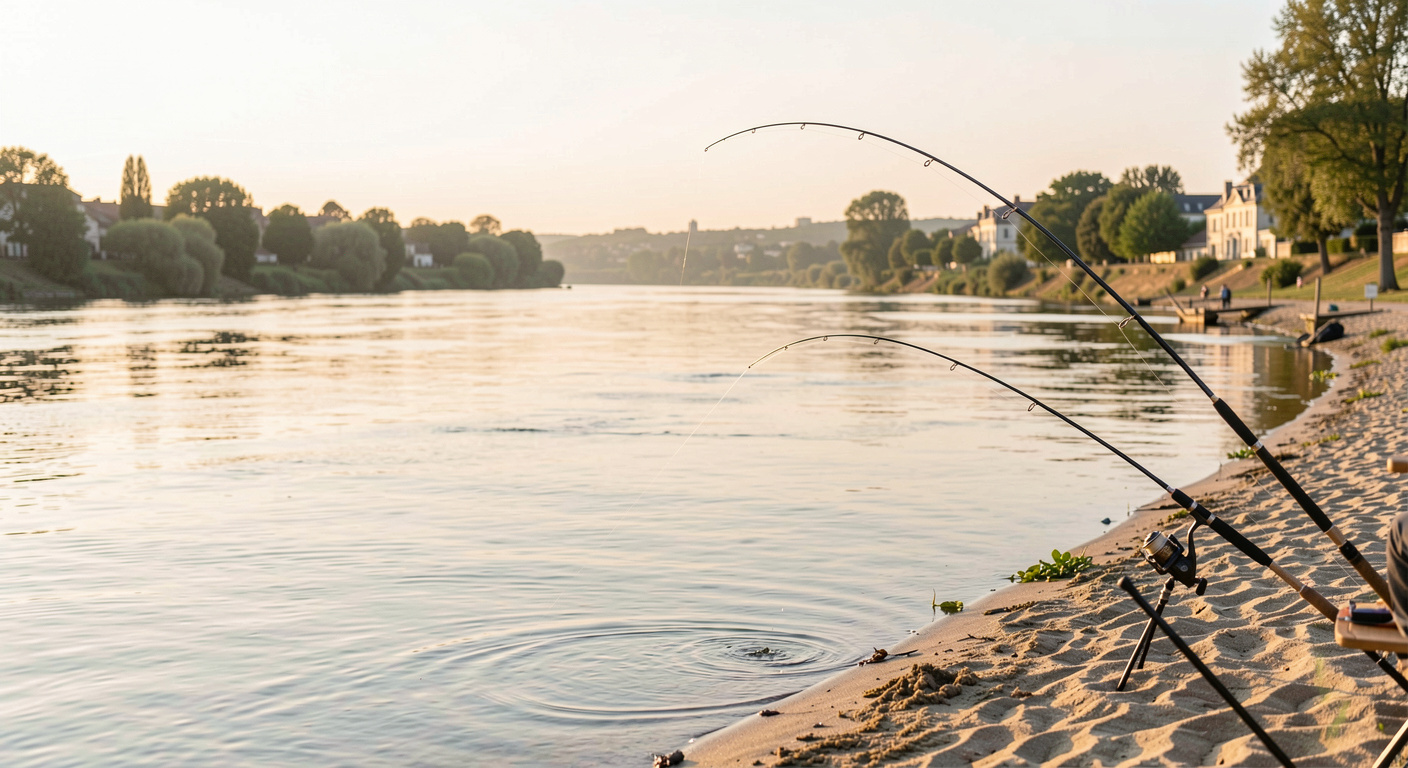
Fishing the Loire in Touraine means reading a big, moving river. The water level sets the species, the lure, and the weight. Local knowledge, like that found in Banc de Loire, a leisure fishing magazine for Indre-et-Loire, helps anglers understand the river's layers. The Loire is not one uniform body of water. It is a series of steps, from shallow sand bars to deep pools. Each step holds different fish and demands different tactics. The key is to match the approach to the water in front of you.
How does the Loire's water level affect fishing in Touraine?
The height of the water decides almost everything. When the river is low, fish concentrate in the deepest channels. When it is high, they spread into flooded areas. In Touraine, the Loire often shows its sandy bottom in summer. This exposes the edges where bass hold. In winter, the same spots are under fast, cold water. Then, the fish move to the deepest holes. The water level also affects the current speed. Faster water means fish need more energy to hold position. They choose seams and eddies. Slower water lets them roam. Anglers must adjust their lures and weights accordingly. A heavy lure that works in spring floods will snag in summer shallows. The rule is simple: let the depth choose the lure, never the other way around.
What are the three main layers of a river swim?
A river swim can be divided into three layers. The first is the bottom. This is where carp and catfish feed. The second is mid-water. Here, predators like pike and zander hunt. The third is the surface. This is where bass and chub strike. Each layer has its own signs. On the bottom, look for bubbles or mud clouds. In mid-water, watch for baitfish scattering. On the surface, see swirls or splashes. The Loire in Touraine offers all three. A single cast can pass through multiple layers. But you must target one at a time. Choose your rig and bait for the layer you believe holds fish. Then, present it naturally. The fish will tell you if you are right.
How to read a touch at the surface?
A touch at the surface is the most visible. A float dips, or a swirl appears behind your lure. This tells you the fish is active and feeding up. In the Loire, surface fishing works best in low, clear water. Early morning and late evening are prime times. Bass and chub are common targets. Use light line and small lures. A popper or a floating minnow can draw strikes. When a fish takes, wait a split second. Then, set the hook firmly. Do not strike too early, or you will pull the lure away. The surface layer is also where you learn to read a touch. The float and the wake show what the fish does before the rod responds. This skill transfers to other layers.
What gear is needed for catfish and carp in the current?
Catfish and carp in the Loire require sturdy gear. The current is strong, and these fish are powerful. Use a heavy rod, at least 2.75 lb test curve. A big pit reel with a good drag is essential. Line should be at least 15 lb, preferably 20 lb or more. For carp, a bolt rig with a heavy lead works. For catfish, a running ledger with a large hook. Baits: boilies, pellets, or dead fish for catfish. In the current, you need enough weight to hold bottom. But not so much that it creates a bow in the line. A tight line helps detect bites. Fish near snags or deep holes. The fosse, or deep pool, is a prime spot. Two rods on the same spot can cover different depths. One for carp on the bottom, one for catfish that holds the pool.
Where to find bass in the shallow edges?
Bass in the Loire prefer shallow edges. Less than a meter of water, especially where sand meets weed. These areas warm up quickly in spring and hold insects and small fish. Bass ambush prey here. Look for structure: fallen trees, rock piles, or weed beds. Cast parallel to the bank to cover water. Use spinnerbaits, small crankbaits, or soft plastics. A slow retrieve often works best. In summer, bass may move to deeper water during the day. But they return to the edges at dawn and dusk. The shallow edge is also where young anglers learn. It is safe and productive. The black-bass holds its posts here, as noted in local guides. Always approach quietly. Bass are spooky in clear, shallow water.
How to fish a rip from a safe position?
A rip is a line of turbulent water where two currents meet. Fish gather here to feed. But it can be dangerous. Never wade into a rip. Fish it from the bank or from a stable boat. Cast upstream and let your lure drift naturally into the seam. Use a heavy enough lure to reach the bottom. But not so heavy that it snags. A jig or a soft plastic on a jighead works well. Bounce it along the bottom. The strike often comes as the lure drops into the seam. Keep your rod tip low and watch the line. In the Loire, rips form around islands and bridge pilings. These are high-percentage spots. But always put safety first. A life jacket is a must. The current is stronger than it looks.
What is the no-kill practice for large predators?
No-kill is the default practice for large predators in the Loire. This means releasing fish unharmed. Use barbless hooks or crush the barbs. Handle fish with wet hands or a landing mat. Do not keep them out of the water longer than necessary. For photos, support the fish horizontally. Never hold a big fish by the jaw alone. This can damage internal organs. If the fish is deeply hooked, cut the line. The hook will dissolve over time. No-kill helps maintain fish populations. It also ensures future fishing opportunities. Many local anglers and guides follow this ethic. It is a sign of respect for the resource.
When is the best time to fish the Loire in Touraine?
Spring and autumn are the best times. In spring, fish are active after winter. They feed heavily before spawning. In autumn, they feed to build fat for winter. Summer can be good early and late. But midday heat pushes fish deep. Winter is slow. But catfish and pike can still be caught. Water temperature is key. Below 10°C, metabolism slows. Above 20°C, fish may be stressed. The Loire in Touraine is fishable year-round. But always check local regulations. Some areas may have closed seasons. The river is a public resource. Enjoy it responsibly.