Surface plugs
Surface plugs never leave the top of the water. They work because a fish looking up sees a clear silhouette against the sky and has to commit before it can inspect anything. What separates the four types below is how much disturbance each one makes, and how much of that disturbance you have to create yourself.
The mistake that costs most fish is speed. A surface plug that is worked hard covers a lot of water and gets refused; the same plug worked in short strokes with a real pause after each one gets eaten. If the water is so rough that the plug is thrown out of it, that is the water asking for a current plug instead.
The four types compared
Noise, water, and what each one asks of you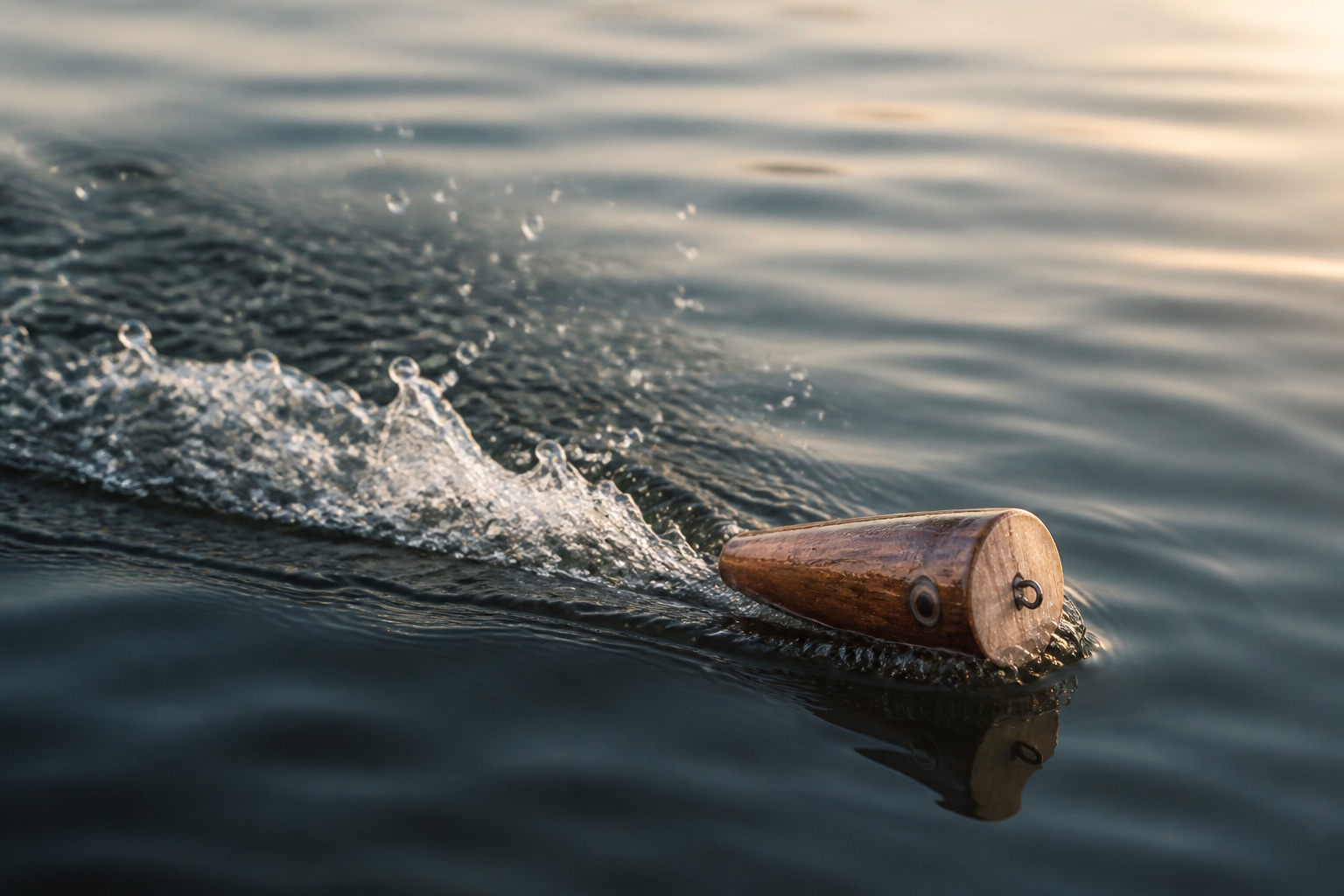
| Type | Noise it makes | Water it suits | Retrieve | Asks of you |
|---|---|---|---|---|
| Cup face popper | Loud, splashy | Chop, white water | Sharp strokes, long pauses | Rhythm and patience |
| Pencil popper | Loud, spitting | Open beach, over bars | Fast rod tip whip | Sustained arm work |
| Surface slider | Almost none | Flat calm, clear | Crawl, or walked on slack | A very light hand |
| Flaptail | Steady clatter | Moderate chop, structure | Straight and slow | Little, once tuned |
Entries in this family
SF-01 to SF-04-
SF-01
Cup face popper
A body with a concave face that scoops water and throws it forward when the rod tip is pulled down. The noise and the bubble trail carry a long way in broken water, and the take almost always comes on the pause, not on the stroke.
- Best light
- Day, dawn
- Retrieve
- Sharp strokes
-
SF-02
Pencil popper
A long tapered body carrying most of its weight in the last third, which is what lets it cast into a headwind and stand nose up at rest. Worked with a fast, small rod tip whip, the head slaps and spits from side to side.
- Best light
- Day
- Retrieve
- Whip and reel
-
SF-03
Surface slider
A plain floating body with no cup and no lip, so it makes only the disturbance you give it. Reeled slowly it wakes quietly, and twitched against a little slack it swings left and right without moving far forward.
- Best light
- Night
- Retrieve
- Slow or walked
-
SF-04
Flaptail
A floating body with a hinged metal plate at the tail that slaps and churns as the plug is pulled. The noise is built in, so a straight retrieve is enough, which makes it the easiest loud plug to fish correctly.
- Best light
- Night, dusk
- Retrieve
- Straight
When the surface stops working
Fish come up to feed when bait is pinned near the top: on a shallow bar, against a beach, over a reef, or in the mess at the end of a jetty. When they stop showing on top, the answer is usually depth or current rather than a louder surface plug.
- Flat calm, clear night, nothing showing: drop to a quiet metal lip swimmer and slow everything down.
- Hard current, plug skating out of the water: change to a darter, which needs that current to work at all.
- Wind in your face and no distance: a pencil popper or a weighted needlefish will get out there when a light popper will not.